
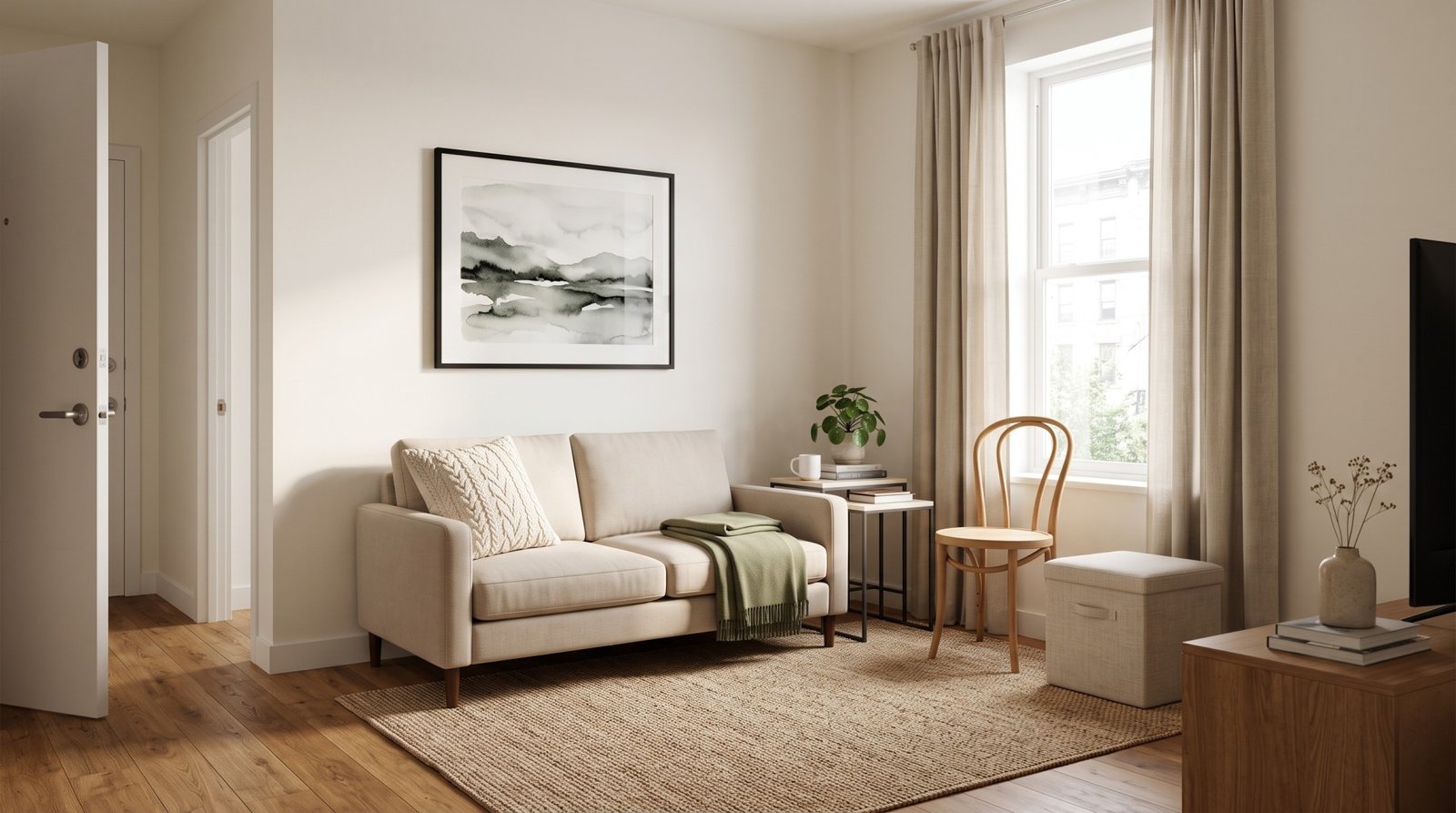
A 9-by-11-foot living room can go from comfortable to crowded with one 88-inch sofa, a deep coffee table, and a floor lamp blocking the only easy path to the door. The most useful small living room ideas on a budget begin by recovering those lost inches, then spending only on pieces that improve seating, storage, or light.
Why Small Living Room Ideas on a Budget Start With Layout
Buying smaller accessories will not rescue a poor floor plan. Before choosing paint, pillows, or baskets, decide where people will walk, where they will put a drink, and which piece deserves the most floor space.
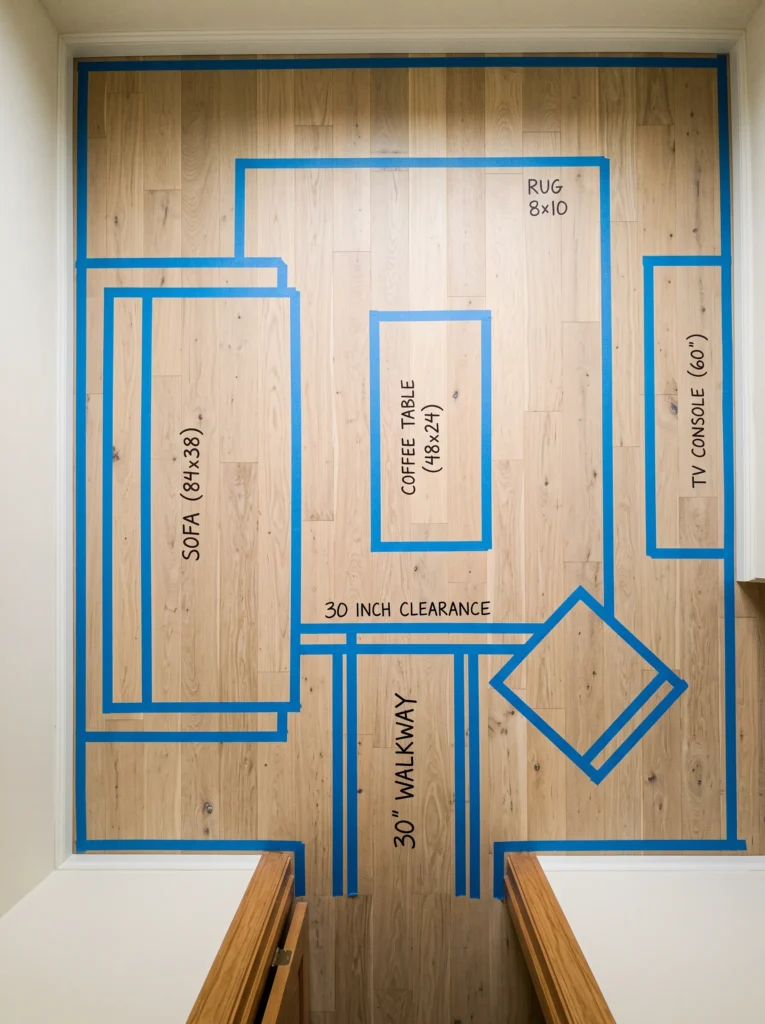
1. Tape the Floor Plan Before Buying
Use painter’s tape to mark the footprint of every major piece directly on the floor. Start with a 30-inch-wide route from the entrance to the next doorway; 36 inches is even better where the room allows it.
Then outline the sofa, tables, and media unit. Live with the tape for a day. If you keep stepping inside a rectangle, that item is too large or in the wrong place.
2. Choose a Compact Sofa
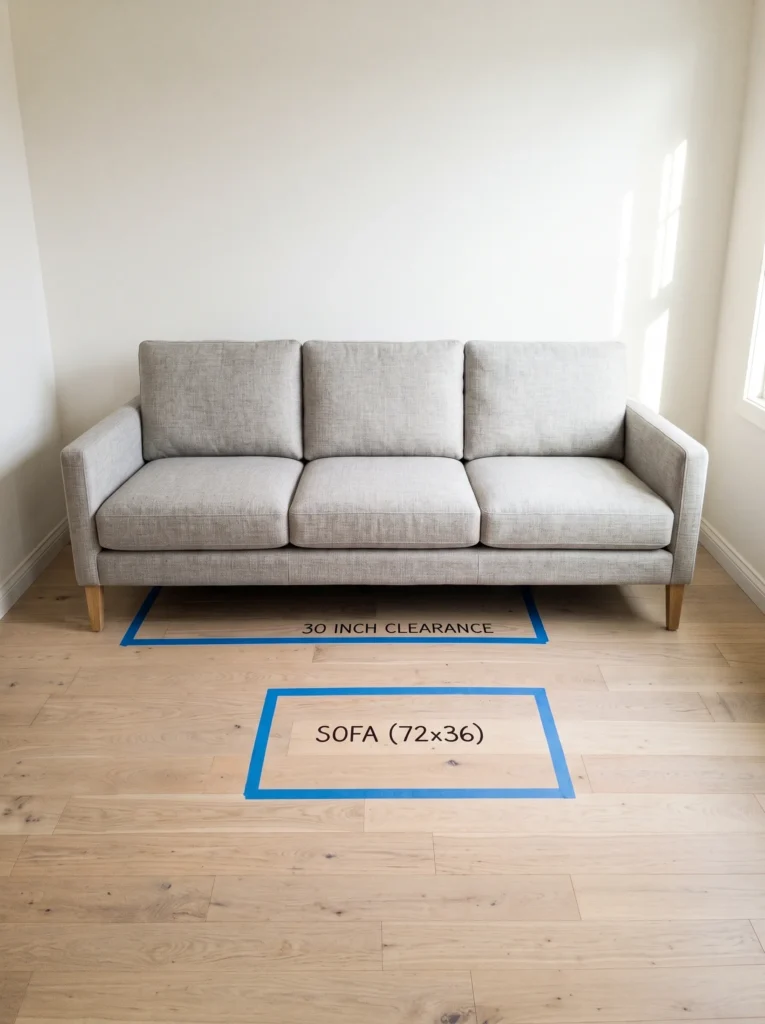
For a 9-by-11 or 10-by-12-foot room, an apartment-size sofa measuring roughly 68 to 78 inches wide is usually more useful than a bulky 88-inch model.
Look for arms under 5 inches wide and a seat depth around 21 to 23 inches. Those proportions preserve usable seating without paying for upholstered bulk.
Set a planning cap of $500 for a new sofa or $250 for a clean secondhand one. The exact local price matters less than refusing to exceed the measured footprint.
3. Let One Wall Work Hard
Pushing every item against a different wall creates a ring of furniture with an awkward hole in the middle. In a truly small room, it is often better to let the longest uninterrupted wall do most of the work.
Place the sofa there, keep its front edge parallel to the wall, and leave the opposite side visually lighter. A sofa does not need to float simply because larger rooms look good that way.
4. Skip the Matching Furniture Set
Avoid buying a sofa, loveseat, chair, coffee table, and two end tables as a set. Matching suites tend to repeat the same heavy arms, dark finish, and oversized proportions.
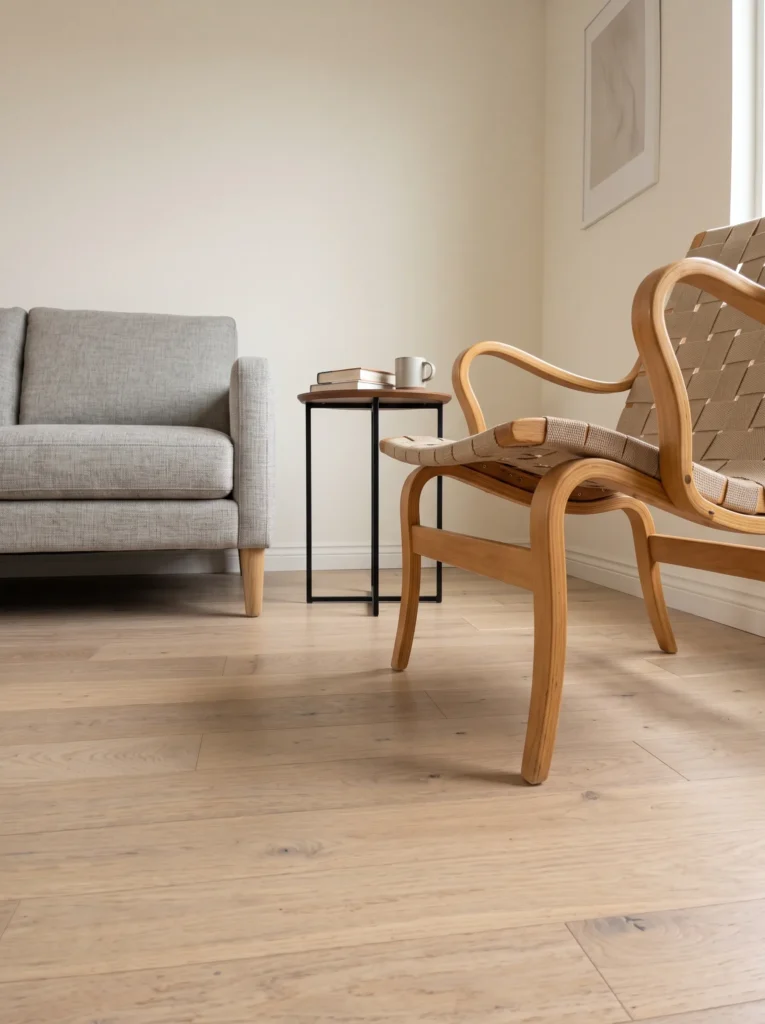
Choose one upholstered anchor, one lighter chair, and only the tables the room actually needs. A vintage wood chair or a simple bentwood dining chair can supply occasional seating for $40 to $100 without swallowing another 30 inches of floor width.
Make Every Inch Perform More Than One Job
The best budget living room decor earns its keep. One piece can provide a seat, a surface, and storage, but only if it is easy enough to use every day.
5. Replace the Coffee Table With Storage
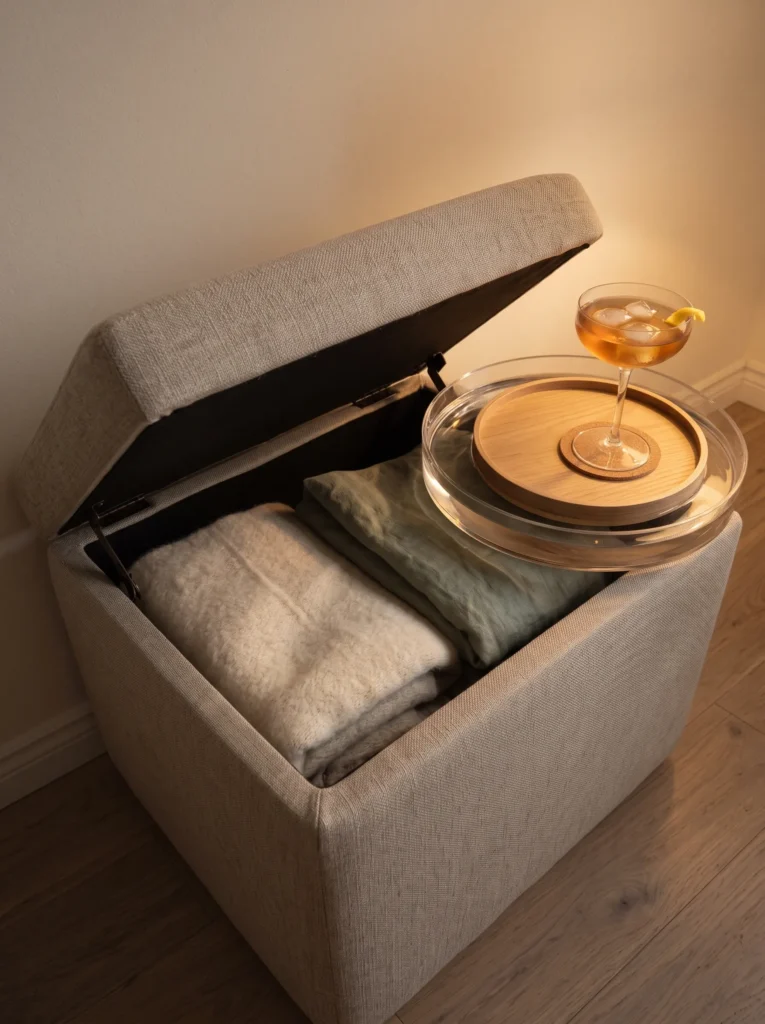
A 24- to 30-inch storage ottoman is a smarter centerpiece than a hard-edged coffee table when knees and walkways are tight.
Choose a flat or tray-topped model so it can hold drinks, then use the interior for throws, game controllers, or a laptop. Allow about 16 to 18 inches between the ottoman and sofa; less than that makes standing up irritating.
A secondhand ottoman plus a washable slipcover can stay under a $100 planning budget.
6. Tuck In Nesting Tables
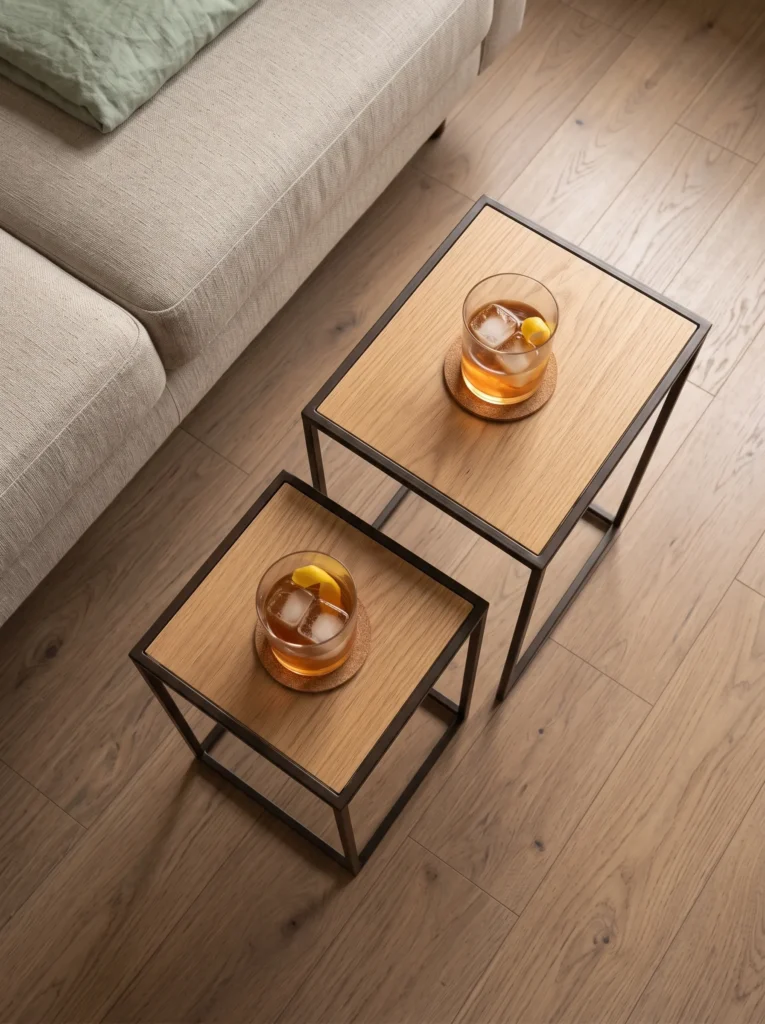
Nesting tables solve a different problem. A pair with 12- to 16-inch tops can sit together beside the sofa, separate when guests need a drink surface, and disappear again afterward.
Metal legs or a slim solid-wood frame look lighter than blocky MDF cubes. Do not buy two end tables out of habit. In many compact rooms, one nesting pair and one floor lamp are enough.
Before ordering either piece, confirm that the ottoman lid can open fully and the nested tables can separate without blocking the protected walkway.
7. Use a Rug Large Enough to Connect the Seats
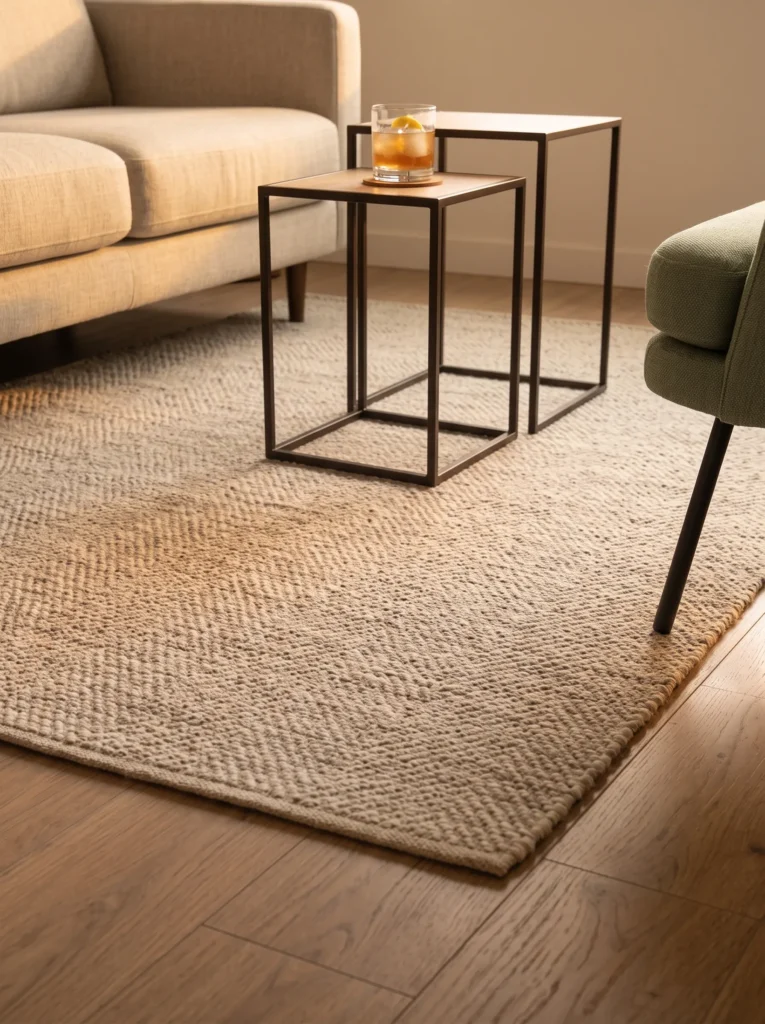
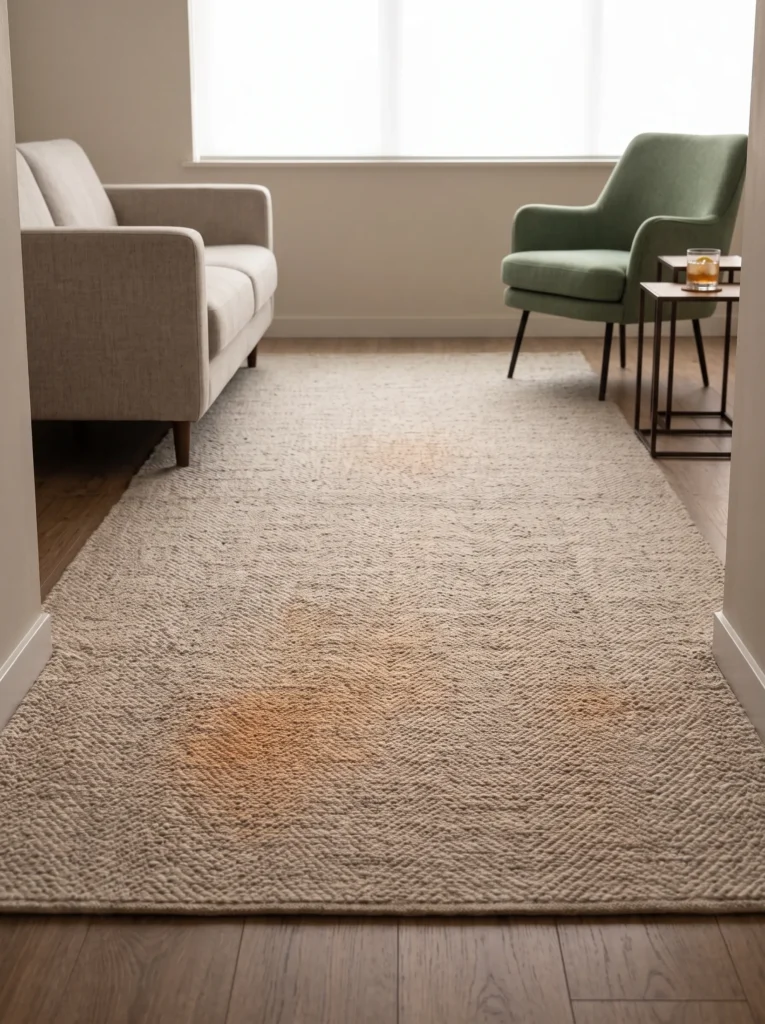
A tiny rug floating in the center makes every furniture piece look isolated. For most small living rooms, a 5-by-8-foot rug is the minimum worth considering; a 6-by-9-foot rug may fit better in a 10-by-12-foot room.
Place at least the front legs of the sofa and chair on it. Aim for the rug to extend 6 to 10 inches beyond each side of the sofa rather than stopping short of the arms.
8. Protect One Clear Walkway
Protect the room’s main route. Keep that path straight when possible, and move side tables out of it instead of expecting people to weave around furniture.
A low-pile polypropylene or flat-woven wool-blend rug is easier under moving chairs than a thick shag. Use a nonslip pad trimmed about one inch smaller than the rug on every side. Curled corners are not a reasonable trade for saving $15.
9. Define an Open Living Area Without Building a Barrier
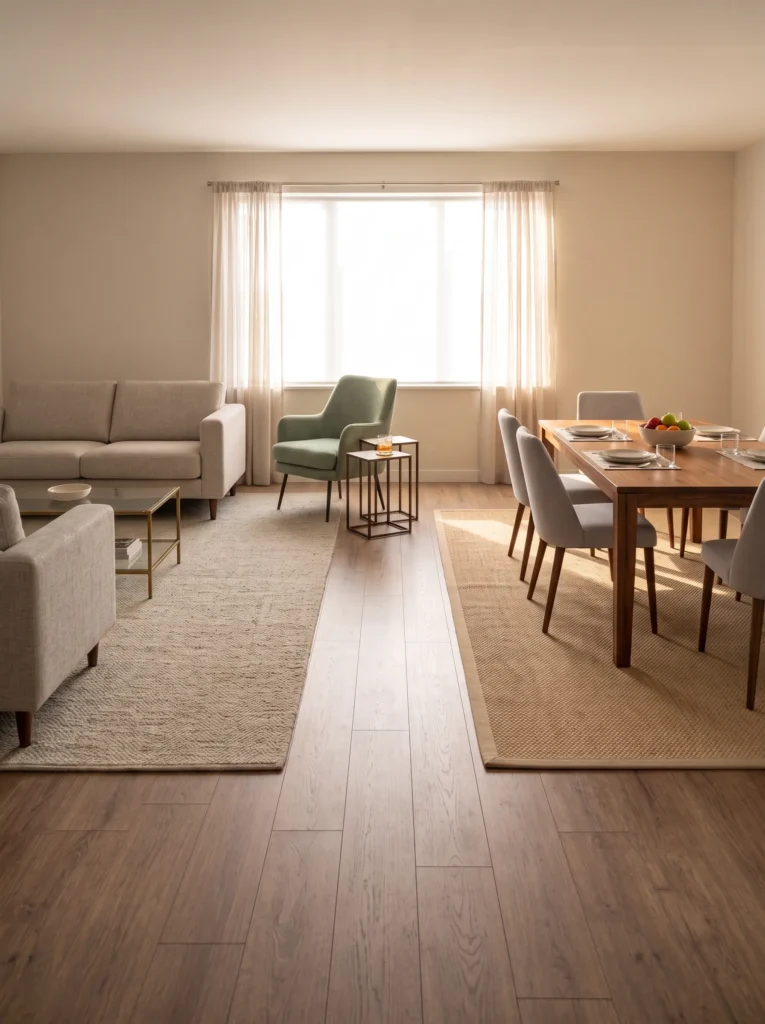
In a studio or combined living-dining room, zoning should clarify the layout without adding a screen, tall shelf, or another bulky object.
Let the rug define the living zone, then repeat one material such as oak, black metal, or warm white across the living and dining sides. The repetition makes the two areas related while their rugs and lighting keep them distinct.
If the sofa back faces the dining area, use it as the boundary only when a 30-inch route still fits behind it. Otherwise, place the sofa on the wall and use a pendant or a narrow runner to identify the dining zone.
A 10- to 12-inch-deep console behind a sofa can work, but skip it if it turns the passage into a squeeze. Empty floor is often the more useful choice.
Test the division at dinner time as well as from the sofa. Dining chairs need room to pull out without entering the living-room path.
Use the Walls Without Making Them Feel Busy
Walls provide storage and height without consuming the central floor area. The trick is to choose a few strong vertical moves rather than filling every surface with small objects.
10. Hang Curtains High and Wide
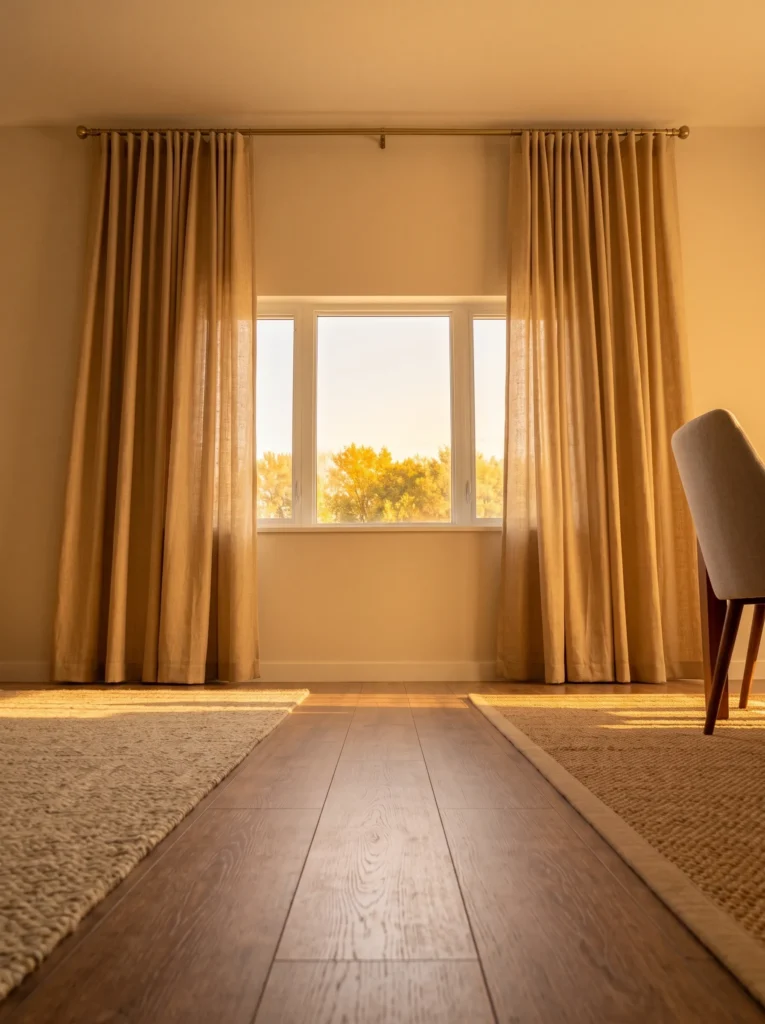
Mount the curtain rod 4 to 6 inches above the window frame and extend it 6 to 10 inches beyond each side when wall space permits. Panels should just touch the floor.
This exposes more glass when the curtains are open and creates a taller line than a rod fixed directly to the trim.
Budget cotton-linen blends hang better when the panels equal roughly 1.5 to 2 times the window width in total.
11. Place One Mirror Deliberately
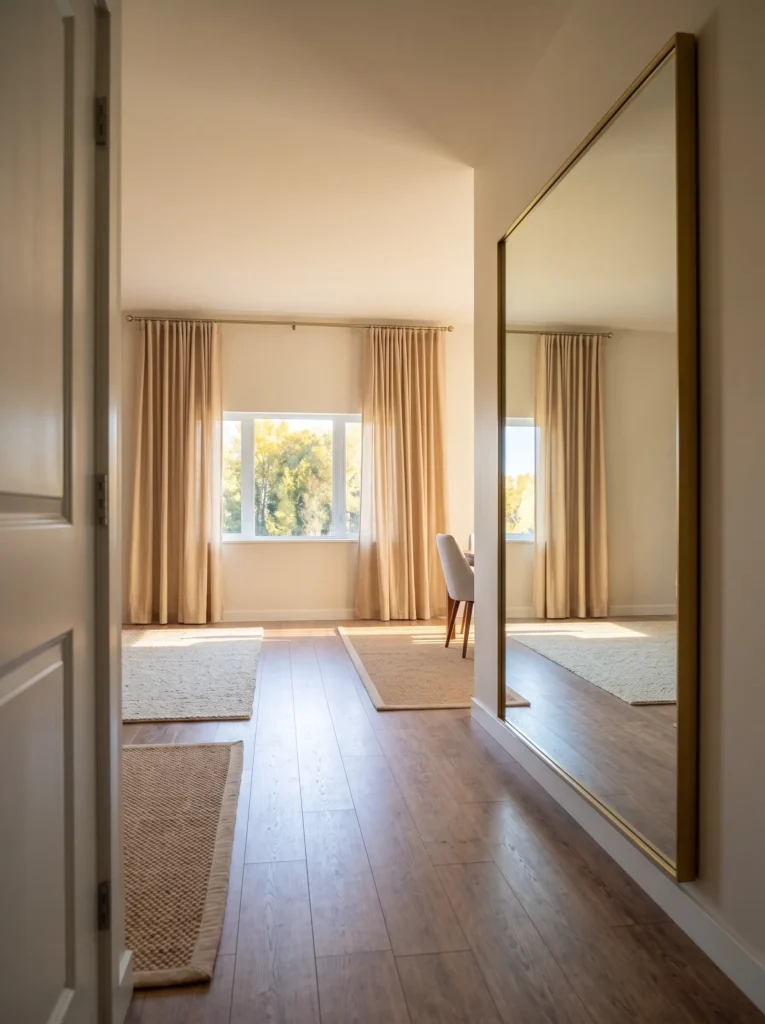
Use one mirror measuring about 24 by 36 inches instead of scattering several tiny ones around the room.
Place it where it reflects a window, an artwork, or a calm wall not the television, entry clutter, or direct glare.
A thrifted wood frame can be painted to match the wall, allowing the reflected light to become the feature. Secure a heavy mirror with hardware rated for its actual weight and appropriate for the wall material.
Check the reflection from both the entrance and the main seat before drilling.
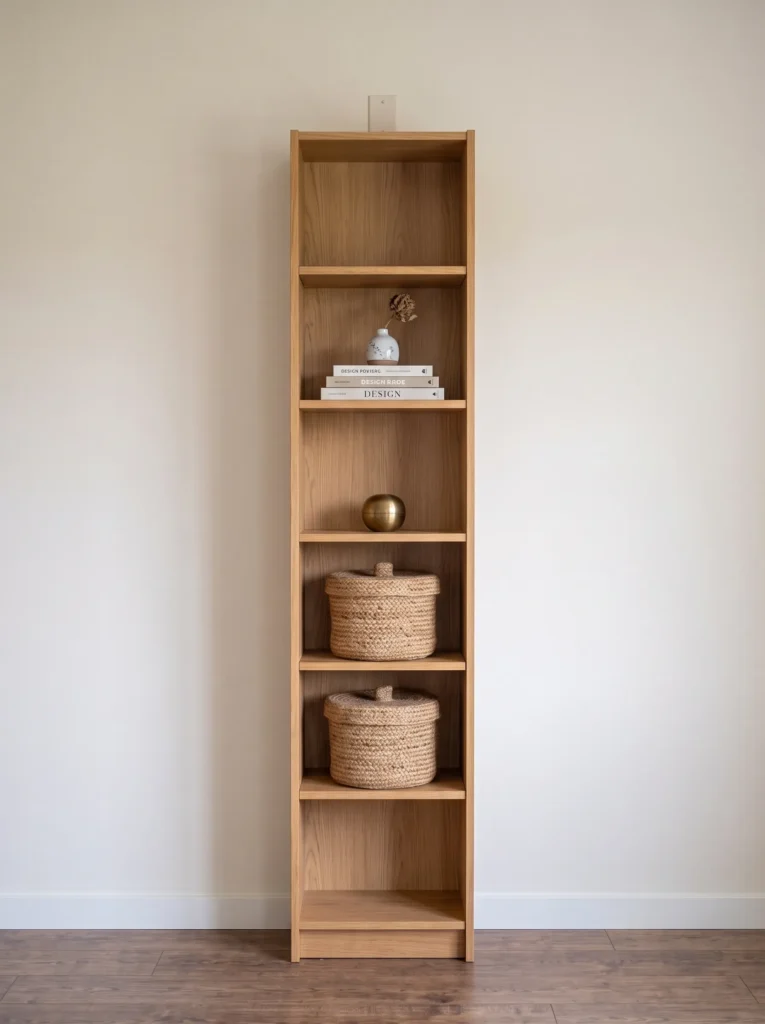
12. Build Upward With Shallow Storage
An 8- to 10-inch-deep bookcase can hold books, baskets, and small speakers without projecting as far as a standard 14-inch unit.
Leave about one-third of its shelves partly open. Packing every shelf to the edge turns vertical storage into a dark block.
For renters, a freestanding ladder shelf may avoid wall holes, but it still needs to be stable and placed outside the main route.
Any tall or narrow storage unit deserves a safety check. The U.S. Consumer Product Safety Commission maintains reports on tip-over injuries and fatalities involving televisions, furniture, and appliances.
Follow the manufacturer’s anchoring instructions, use hardware suited to the wall, and get landlord approval where the lease requires it.
13. Keep the Media Side Low
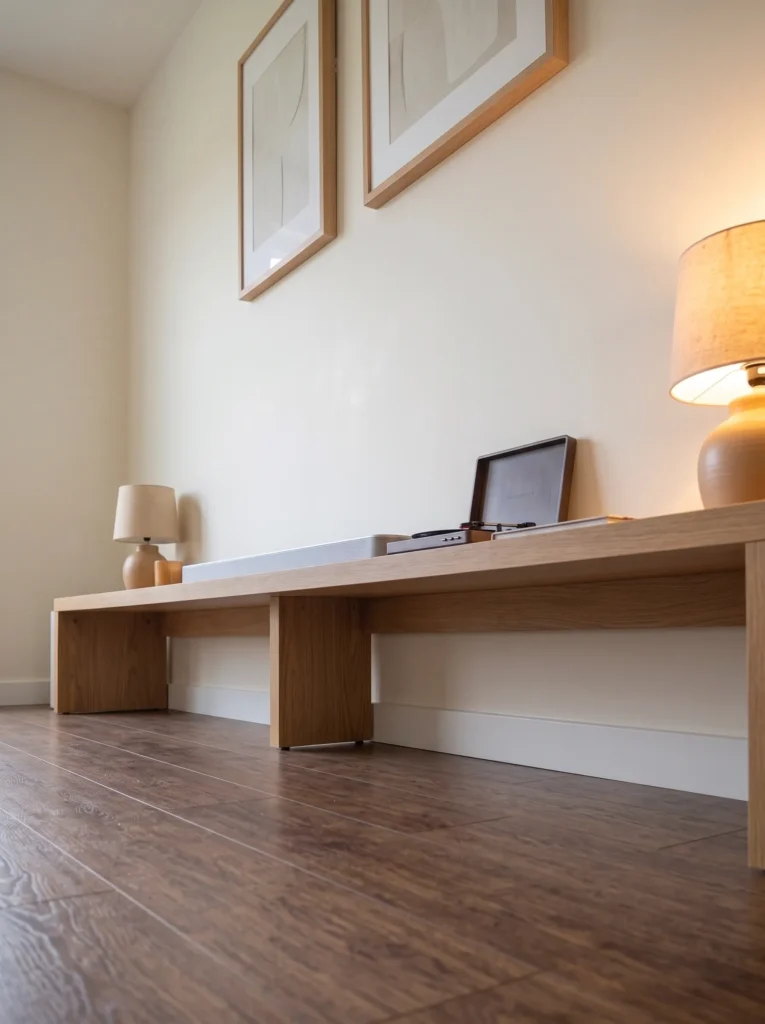
Opposite the sofa, choose a media console around 16 to 18 inches high and no deeper than necessary for the equipment.
A long, low silhouette feels calmer than a tall entertainment center. Look for a design with closed storage or cable openings so wires, chargers, and small electronics do not remain visible.
Wall-mount the television only when the wall, lease, and cable plan all support it.
14. Use a Picture Ledge Instead of a Crowded Gallery Wall
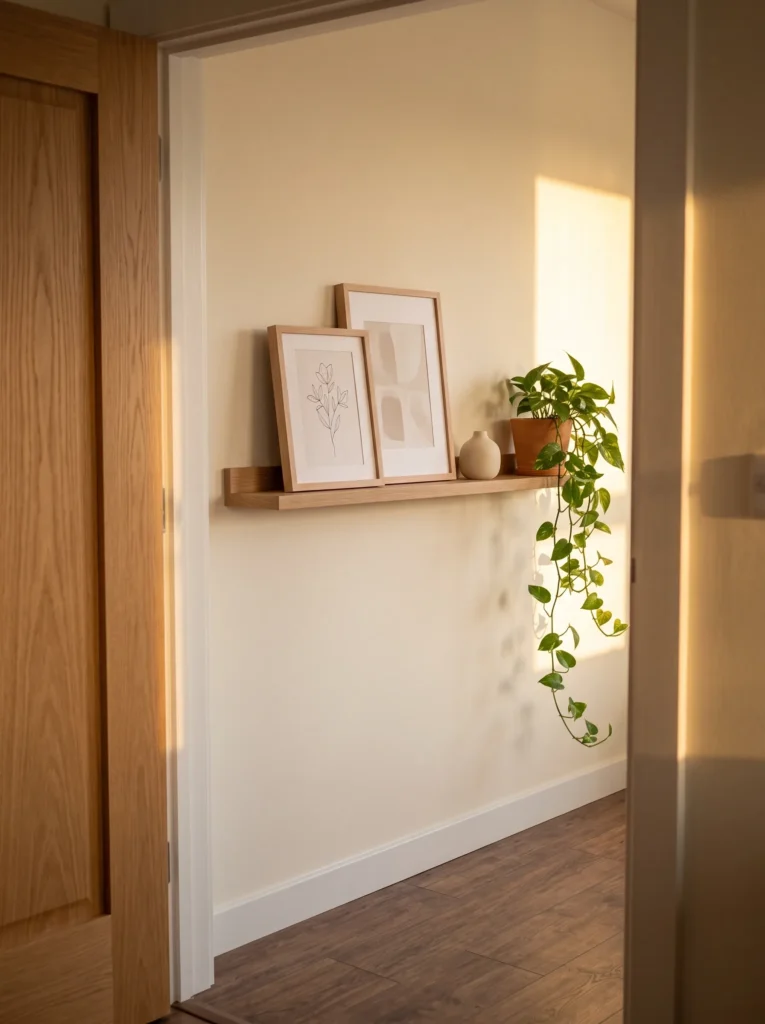
A single 36- to 48-inch picture ledge can hold two framed prints, one small object, and a trailing plant while using only 4 to 5 inches of depth.
It is easier to rearrange than a grid of twelve frames, and it requires fewer holes. Hang it above the sofa with the lowest frame roughly 6 to 8 inches above the sofa back so the grouping feels connected to the furniture.
Choose frames in two finishes at most for example, oak and matte black and vary their heights by at least 3 inches. That creates enough contrast without making the wall restless.
If drilling is prohibited, lean two larger frames on a low console and use museum putty underneath to reduce sliding. Adhesive strips are useful only within their stated weight limit and on a compatible, fully cured painted surface.
Lay the complete arrangement on the floor first, photograph it, and transfer only the version that still looks balanced from six feet away.
Add Warmth Without Adding Visual Clutter
Small-room layout ideas work best when the eye can understand the room quickly. Closed storage, controlled color, and fewer larger accents create that order without making the space sterile.
15. Hide Daily Clutter
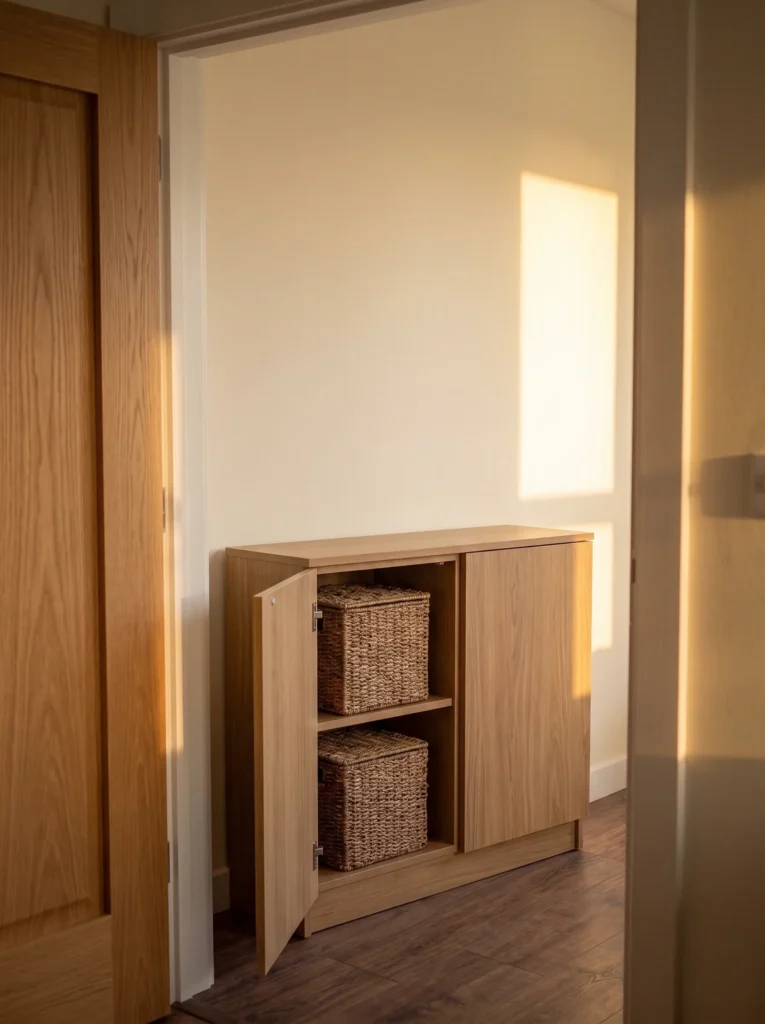
Open baskets look attractive until every charger, pet toy, and mail envelope is visible. Give the mess a door or lid.
A 48- to 60-inch low cabinet can combine television storage, paperwork, and board games in one run. If that exceeds the budget, place two matching lidded baskets under a bench or console.
Measure the opening before shopping. A basket that protrudes even two inches makes the whole setup look accidental.
16. Limit the Palette to Three Main Colors
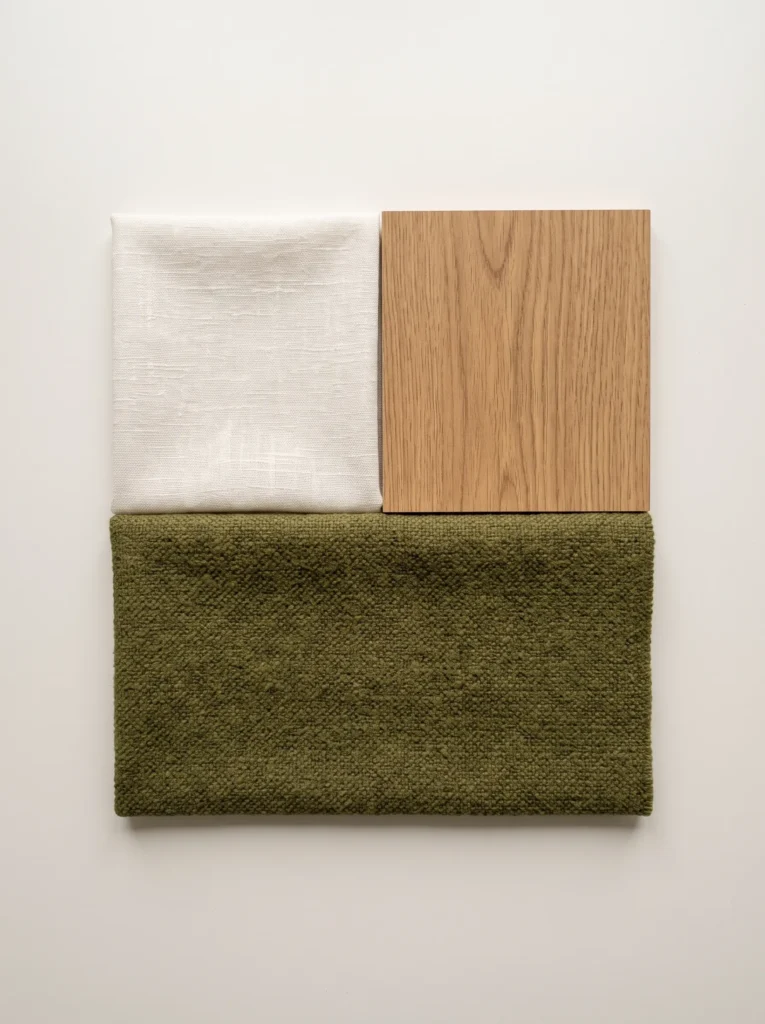
Use a simple 60-30-10 color guide: about 60 percent light neutral on walls and large upholstery, 30 percent mid-tone wood or a muted color, and 10 percent dark or saturated accents.
This is a planning tool, not a mathematical rule. Warm white, medium oak, and olive green make a flexible trio; cream, walnut, and rust feel richer.
Repeat the accent color three times rather than buying seven unrelated decorative colors.
17. Add Texture in Thin Layers
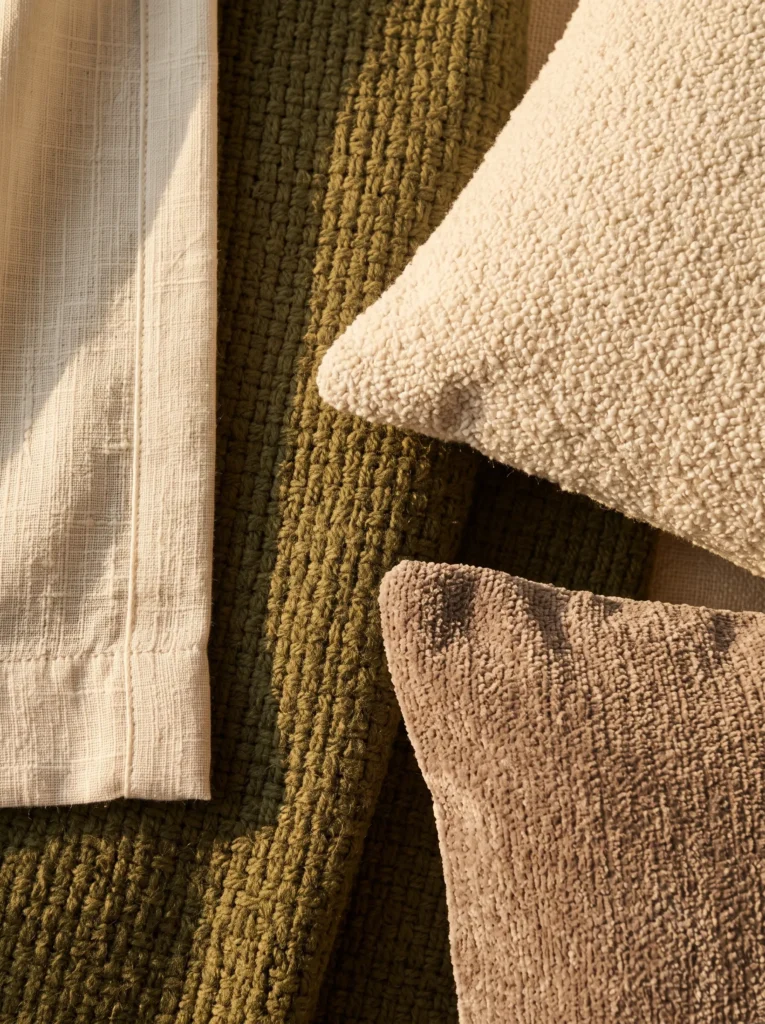
Texture adds depth without occupying much room. Start with one washable woven throw, two pillow covers in different weaves, and curtains with a visible linen-like slub.
Keep the sofa cushions limited to two or three. Five decorative pillows on a 72-inch sofa steal a seat.
Pillow covers cost less to store and replace than filled pillows, especially when one set of 20-inch inserts works across seasons.
18. Choose One Large Artwork
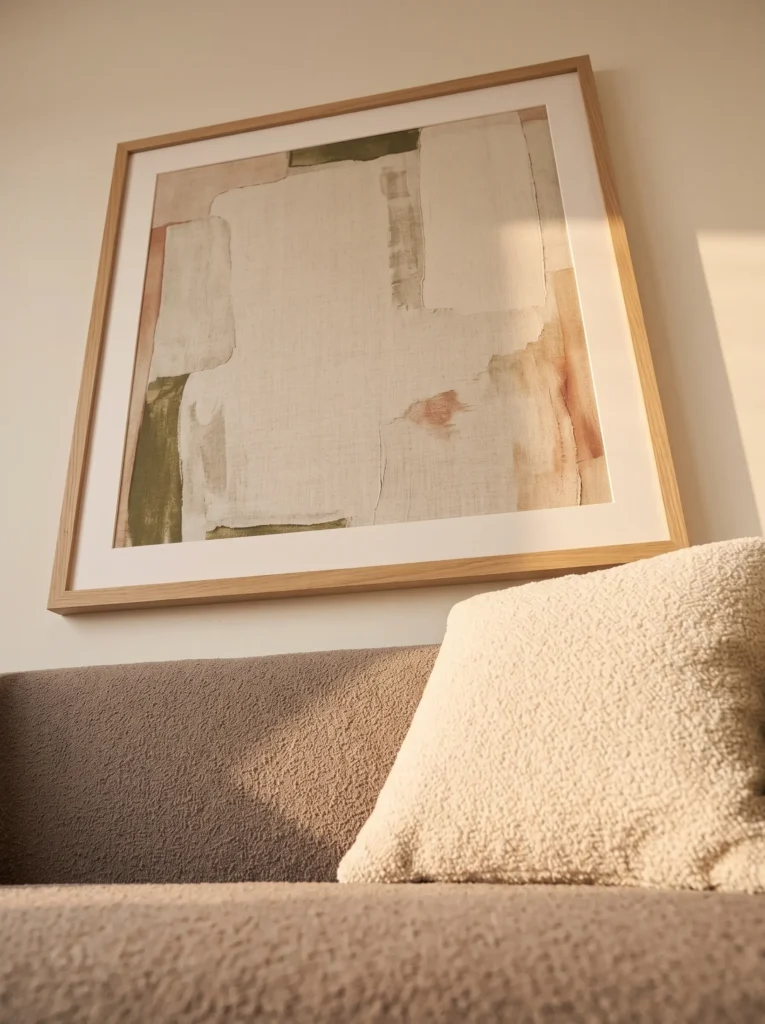
Above the sofa, one artwork or paired set should span roughly one-half to two-thirds of the sofa width.
A 40-by-30-inch print has more presence than nine 8-by-10 frames and creates fewer visual edges.
Downloadable public-domain art, a local print, or a textile remnant in a secondhand frame can keep the project under a $75 planning cap.
Avoid generic word signs. An image with recognizable color and shape gives the room more character without telling visitors how to “live” or “laugh.”
Choose the artwork after the rug so their colors connect.
Finish the Room With Better Light and Less Stuff
Lighting is where an inexpensive room can feel considered. Use daylight first, add light at different heights after dark, and remove anything that does not support the final arrangement.
19. Layer Three Light Sources
One bright ceiling fixture flattens a small room and leaves the sofa corners gloomy.
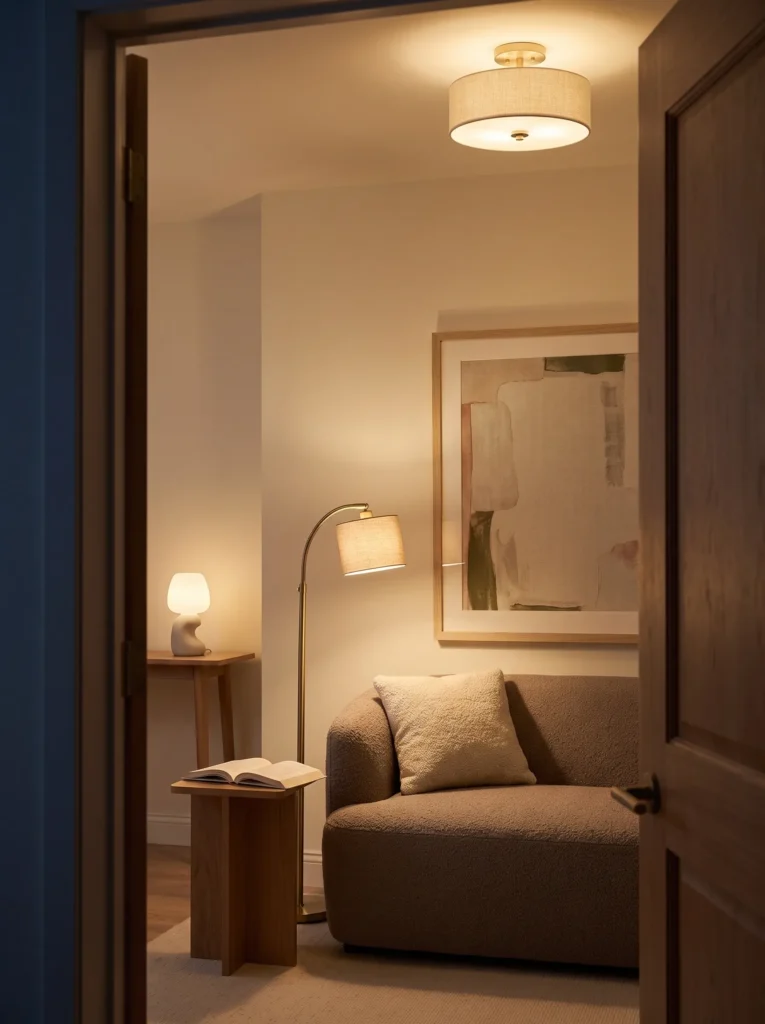
Use three sources instead: the ceiling light for cleaning, a floor or plug-in wall lamp near the sofa for reading, and a small table lamp on the media unit for evening ambience.
A plug-in sconce frees a side table, but its cord should run through a paintable cover rather than hanging loose.
20. Use Warm Bulbs With Simple Controls
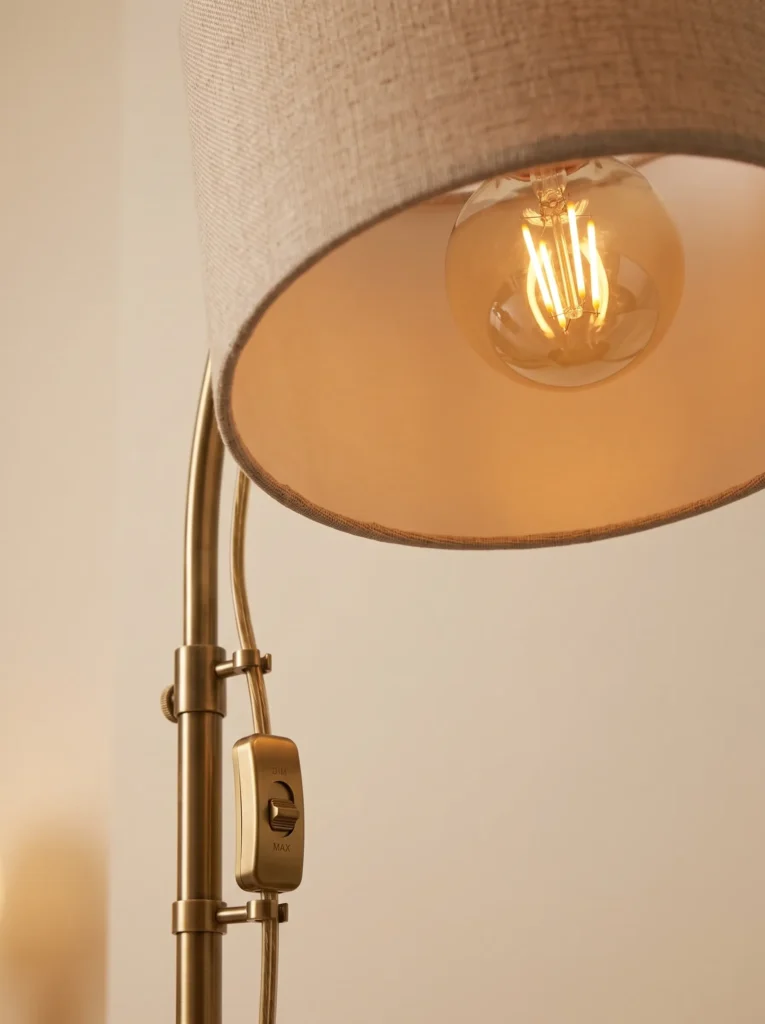
Choose LED bulbs around 2700K for a warm evening tone and match the color temperature across visible fixtures.
An 800-lumen bulb is a practical starting point for a reading lamp. Use a compatible plug-in dimmer or smart bulb when lower light is useful at night.
Spend on the shade before the lamp base. An off-white linen shade diffuses light more softly than a narrow opaque metal one.
During the day, keep the window glass as open as privacy allows. According to the U.S. Department of Energy’s Building Science Education resource on natural light and daylighting, strategic daylight use can brighten interiors and reduce reliance on artificial lighting, while glare and unwanted heat still need control.
21. Edit Every Surface Before Buying the Final Accessories
Finish by emptying the coffee table, console, windowsill, and open shelves. Return only items that serve a purpose or carry real visual weight.
A useful formula for a small coffee table is one tray, one low object, and enough empty space to set down two drinks.
On a console, try a lamp, a framed piece, and one container. Stop there.
Move the rejected items to a box outside the room for two weeks. If nothing is missed, donate, sell, or relocate them.
This pause prevents the familiar cycle of decluttering and immediately purchasing replacement decor.
When the room needs one final layer, spend on function first. A $35 lamp that fixes a dark corner is more valuable than $35 divided among small ornaments.
The aim is not a bare room. It is a room where the sofa, pathway, light, and a few chosen objects can all be noticed.
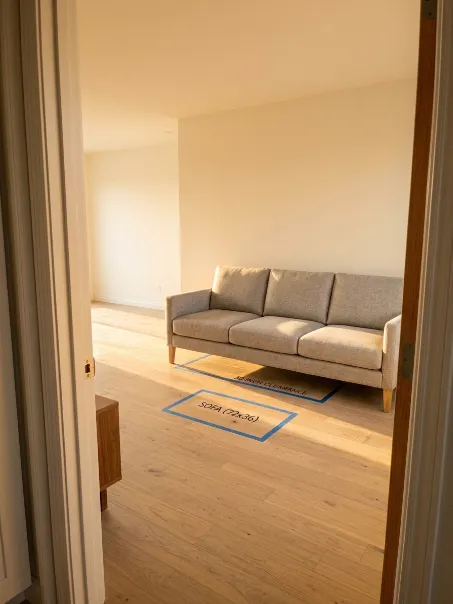
Take a doorway photo before shopping. It exposes crowded surfaces and blocked sightlines.
Frequently Asked Questions
What Is the Cheapest Way to Update a Small Living Room?
Rearrange before buying anything. Tape a 30-inch walkway, move the largest sofa to the longest usable wall, and remove one unnecessary table.
Then set a $100 cap: roughly $25 for matching pillow covers, $35 for a lamp or shade, and $40 for a thrifted frame, basket, or curtain panels.
Paint can help, but layout and lighting usually deliver more improvement per dollar—and they are easier for renters to reverse.
What Colors Make a Small Living Room Look Bigger?
Light-reflective walls can make the boundaries feel calmer, but stark white is not the only answer.
Warm white, pale greige, muted sand, or a soft gray-green can work when the ceiling and trim do not create harsh contrast.
Keep the largest surfaces related, then add one medium wood tone and one darker accent. A room usually feels smaller when it is chopped into many unrelated colors, not merely because one color is dark.
Should a Sofa Touch the Wall in a Small Living Room?
It can. In a compact room, leaving an arbitrary 3-inch gap behind the sofa only collects dust and wastes space.
Put the sofa close to the wall if doing so preserves a clear path and a comfortable viewing distance.
Float it only when the back helps define an open-plan zone and at least a 30-inch passage remains behind it. Layout needs should decide the position, not a blanket decorating rule.
How Can a Small Living Room Look Larger Without Renovation?
Expose more of the window, keep the main walkway visible, and reduce the number of furniture legs and small objects competing for attention.
Use a correctly sized rug, one substantial artwork, a low media unit, and storage with doors or lids.
Keep curtains near the wall color, repeat the same two or three finishes, and light at least two corners after dark.
These changes make the room easier to read, which matters more than trying to disguise its actual dimensions.
Choose the First Move Before You Shop
For a 10-by-12-foot living room, the most useful first step costs about $8: buy painter’s tape, mark a 30-inch route through the room, and outline a sofa no wider than 78 inches.
If the path works for a full day, keep the plan. Only then should money go toward the sofa, rug, storage, or lighting that fits inside those lines.