
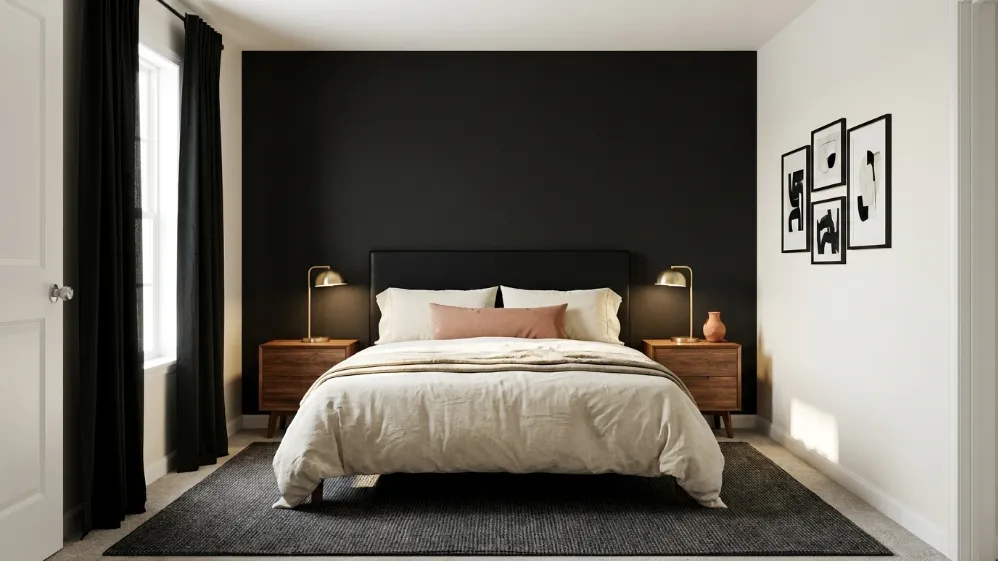
Picture a matte-black wall behind a bed dressed in washed ivory linen, with a brass lamp casting a warm circle across a walnut nightstand. The room does not feel gloomy or cramped. It feels quiet, intentional, and just dramatic enough.
That balance is what makes the best black bedroom ideas work. Black needs contrast, texture, and well-placed light; otherwise, a stylish dark color scheme can quickly turn into one flat, heavy block. The ideas below show exactly where to use black, what to pair with it, and how to create the look on a realistic decorating budget.
Why Some Black Bedrooms Feel Heavy
Black becomes difficult when it covers too many uninterrupted surfaces. Four black walls, a black bed, dark curtains, and a solid black rug leave the eye with nowhere to rest.
A successful black bedroom usually follows three rules:
- Every large black surface has a lighter surface beside it.
- Different textures are used to break up the color.
- Lighting comes from more than one height and direction.
A matte wall, velvet headboard, linen pillow, and brushed-metal lamp may all be black, but they react to light differently. That variation gives the room depth.
Natural light also deserves careful attention. According to the U.S. Department of Energy’s guidance on natural light and daylighting, effective daylight use can brighten interior spaces and reduce reliance on artificial lighting.
In a black bedroom, keep window sills clear, avoid placing tall furniture directly in front of the glass, and mount curtains wide enough to uncover the full window during the day.
17 Black Bedroom Ideas That Feel Refined and Comfortable
1. Frame the Bed With a Matte-Black Accent Wall
A single matte-black wall behind the headboard is the safest and most effective place to begin. It frames the bed like an architectural feature without surrounding the entire room in darkness.
Keep the remaining walls warm white, soft cream, or pale greige. I would avoid a stark blue-white because the contrast can feel cold and overly sharp, particularly under cool LED bulbs.
For the strongest result, use:
- Matte or flat black paint
- Ivory or oatmeal bedding
- Medium-tone wood nightstands
- Warm-white bulbs between 2700K and 3000K
One gallon of interior paint is generally enough for a standard bedroom accent wall, although wall texture and the existing color will affect coverage. Use a tinted primer when covering a very pale wall so the black develops evenly.
Do not place a large black bed against the black wall unless it has a visible wood, brass, or light-fabric border. Otherwise, the bed may disappear into the background.
2. Add Depth With Black Board-and-Batten Paneling
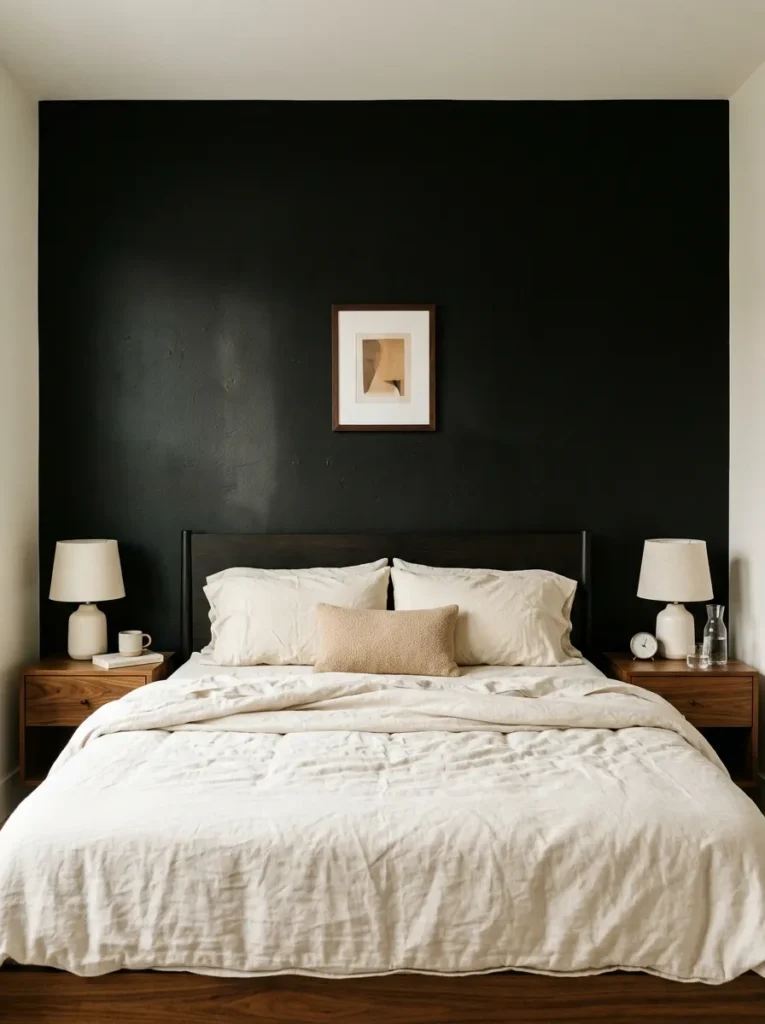
Flat black paint can look polished, but board-and-batten gives the wall more dimension. The narrow shadows between the battens shift from charcoal to deep black as daylight moves through the room.
For an 8-foot wall, vertical battens spaced approximately 12 to 16 inches apart usually feel balanced. Wider spacing looks cleaner and more contemporary, while narrow spacing creates a busier, more traditional effect.
Pre-primed MDF is a practical material for a dry bedroom. Fill the nail holes, caulk the edges, sand the repaired areas, and paint the battens and wall in the same finish.
A 10-foot DIY feature wall may cost roughly $120 to $250 in materials, depending on the trim profile and paint selected.
Keep the rest of the styling restrained. Cream bedding, one lumbar pillow, and a single brass or ceramic lamp are enough. The wall treatment already supplies the visual detail, so additional artwork above the bed is usually unnecessary.
3. Divide the Walls With Black and Warm Beige
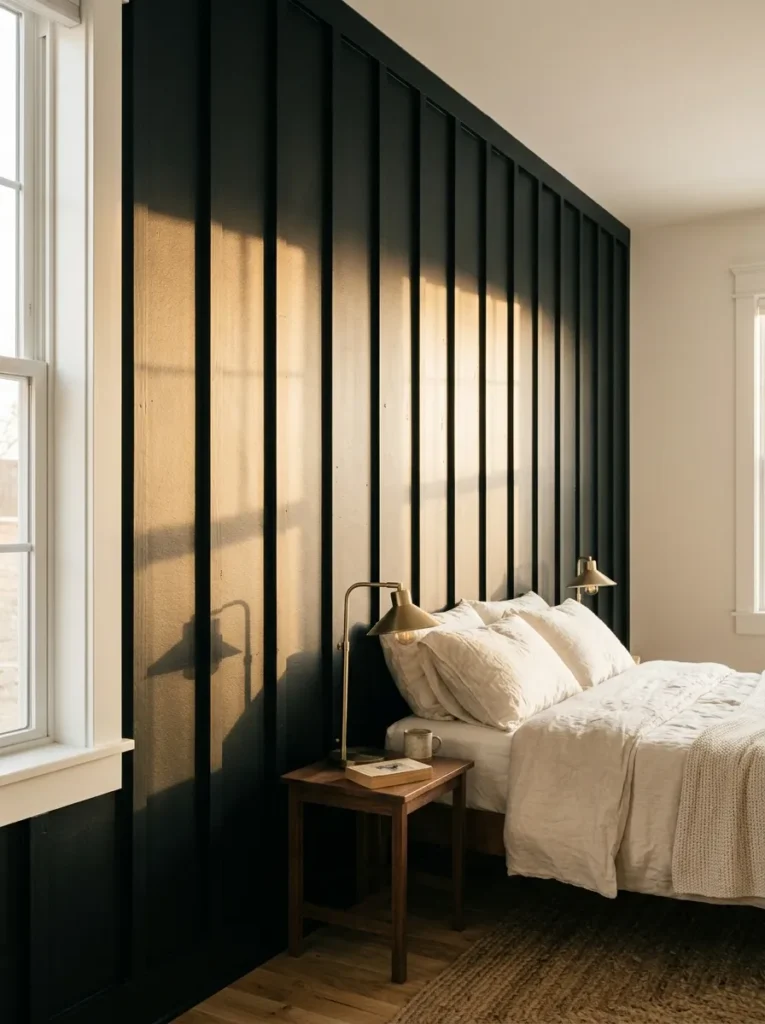
Two-tone walls give you the grounding effect of black without placing it at eye level throughout the room.
Paint the lower 36 to 42 inches black, install a slim chair rail, and use warm beige, mushroom, or soft greige above it. This works especially well in rooms with standard 8-foot ceilings because the pale upper section preserves visual height.
For a clean finish, paint the baseboards the same black as the lower wall. A white baseboard cutting across the dark section can make the room look visually fragmented.
Choose beige with muted brown or gray undertones rather than a strong yellow cream. Medium wood furniture will connect the two wall colors naturally.
This is also a useful option for a room that already contains dark furniture. The black lower wall creates a defined base, while the beige upper wall prevents the entire scheme from becoming too dense.
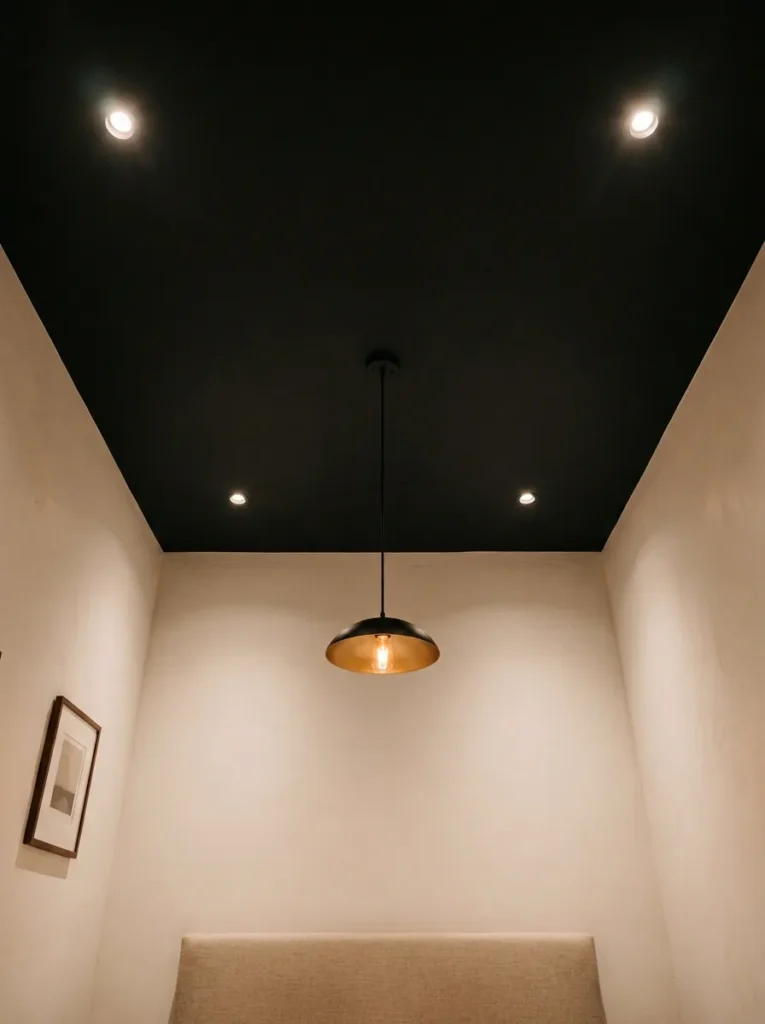
4. Paint the Ceiling Black and Leave the Walls Light
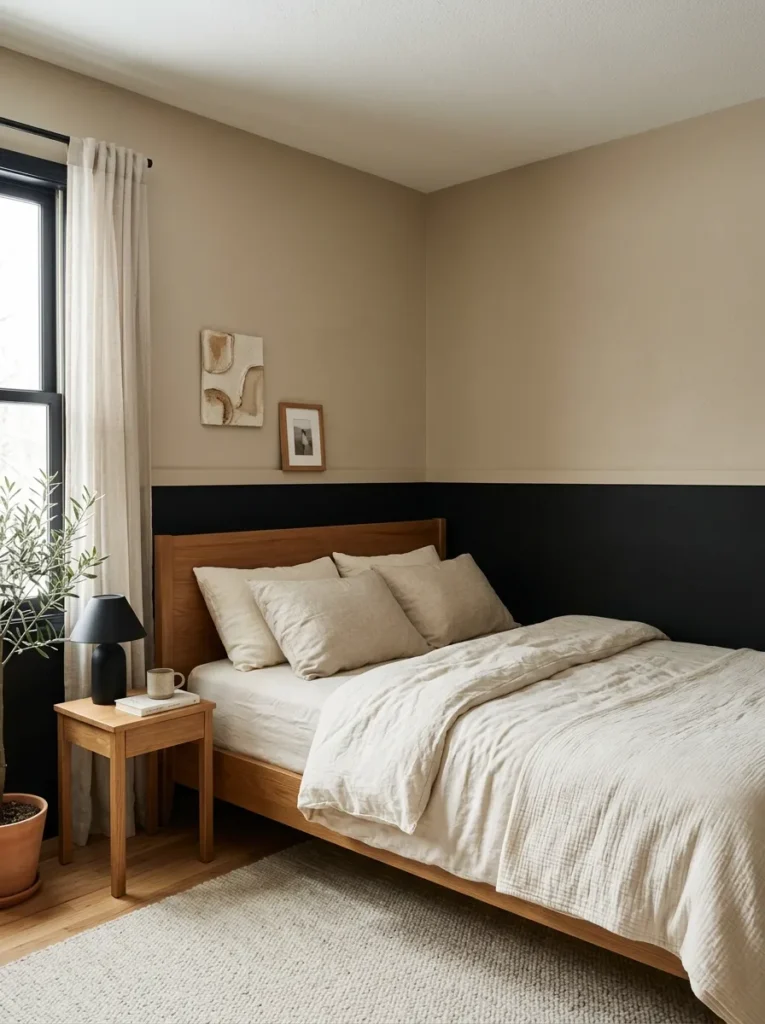
A black ceiling creates a cocooned atmosphere without surrounding the bed with dark walls. The effect can feel unexpectedly calm when the walls remain white, cream, or pale gray.
This approach is most successful in rooms with ceilings around 9 feet or higher. In a low room with limited daylight, black overhead may visually compress the space.
Use true matte ceiling paint. Satin and semi-gloss finishes can highlight roller marks, patched areas, and uneven ceiling texture.
The lighting plan matters as much as the paint. Use two bedside lamps plus a pendant, floor lamp, or recessed lights on a dimmer. One central overhead fixture often produces harsh shadows and makes the black ceiling feel heavier.
Warm lighting helps the ceiling visually recede at night while preserving the intimate, wrapped-in feeling that makes this idea appealing.
Black Bedroom Furniture That Adds Contrast Without Bulk
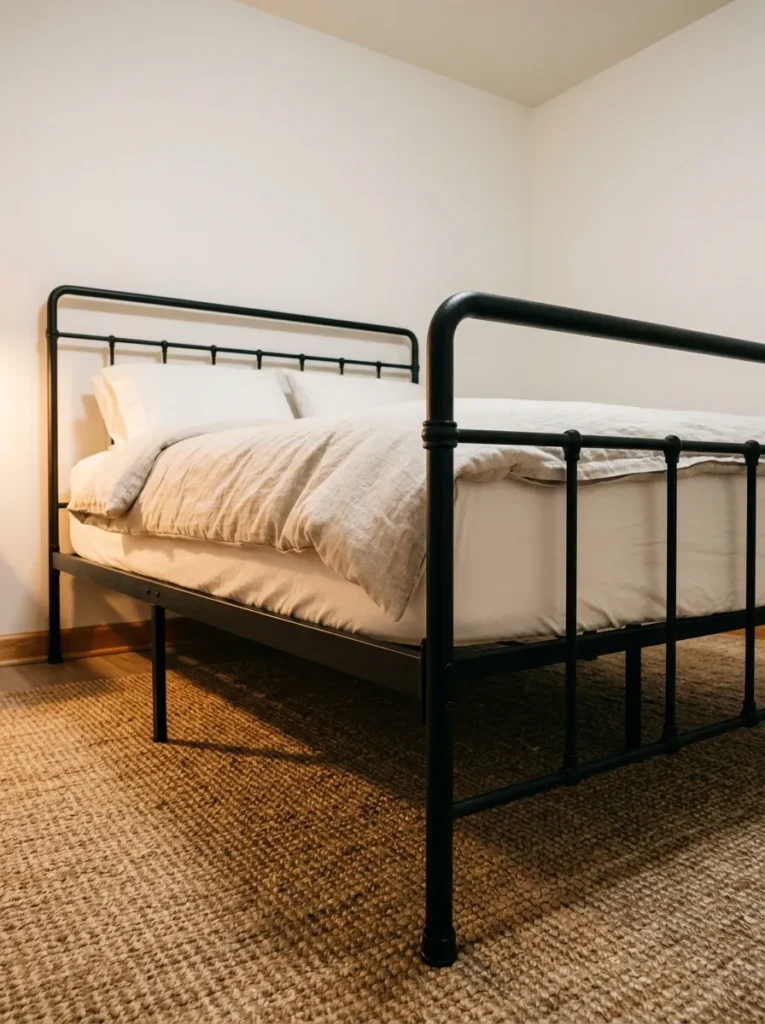
5. Choose a Slender Black Iron Bed
A thin iron or steel bed introduces black through outline rather than mass. The wall, bedding, and floor remain visible through the frame, which helps the room feel open.
Look for a headboard with generous spacing between the rails and a frame that stands on visible legs. Very thick rails or an oversized solid footboard can make a compact bedroom feel crowded.
A queen-size metal frame may fall between approximately $170 and $350, but check whether the listed price includes slats, center supports, and a foundation.
Pair the bed with:
- Pale linen or washed-cotton bedding
- A jute or lightly patterned rug
- Warm wood nightstands
- One or two black-framed prints
Avoid covering the headboard with a tall stack of decorative pillows. The open structure is the feature, so allow it to remain visible.
6. Make One Black Dresser the Room’s Anchor
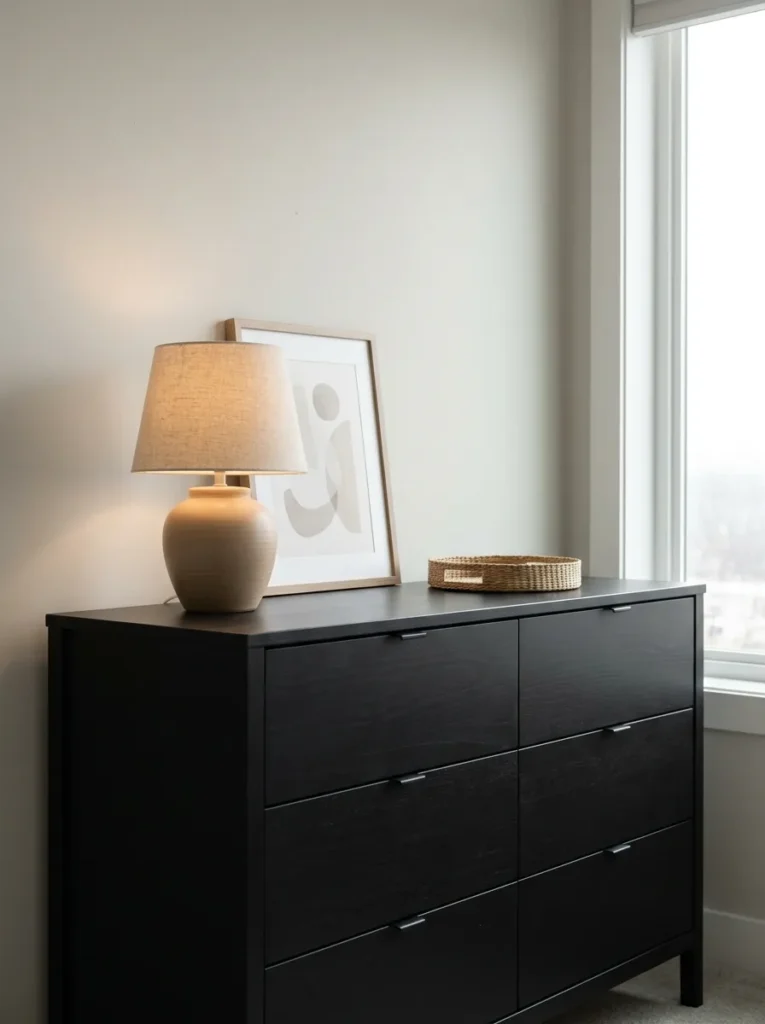
One substantial black dresser looks more intentional than several unrelated black furniture pieces scattered around the room.
Choose a dresser that suits the scale of the wall, leaving approximately 6 to 12 inches of breathing room on each side where possible. A piece that is too narrow may look stranded, while one that nearly touches both corners can make the wall feel overcrowded.
Style the top with only a few useful objects:
- One table lamp
- One mirror or framed print
- One low tray or ceramic bowl
A secondhand solid-wood dresser can be cleaned, lightly sanded, and refinished in matte black for considerably less than buying a new statement piece.
Safety matters with tall and drawer-based furniture. The U.S. Consumer Product Safety Commission recommends anchoring furniture such as dressers, bookcases, and cabinets to the wall to reduce tip-over risks.
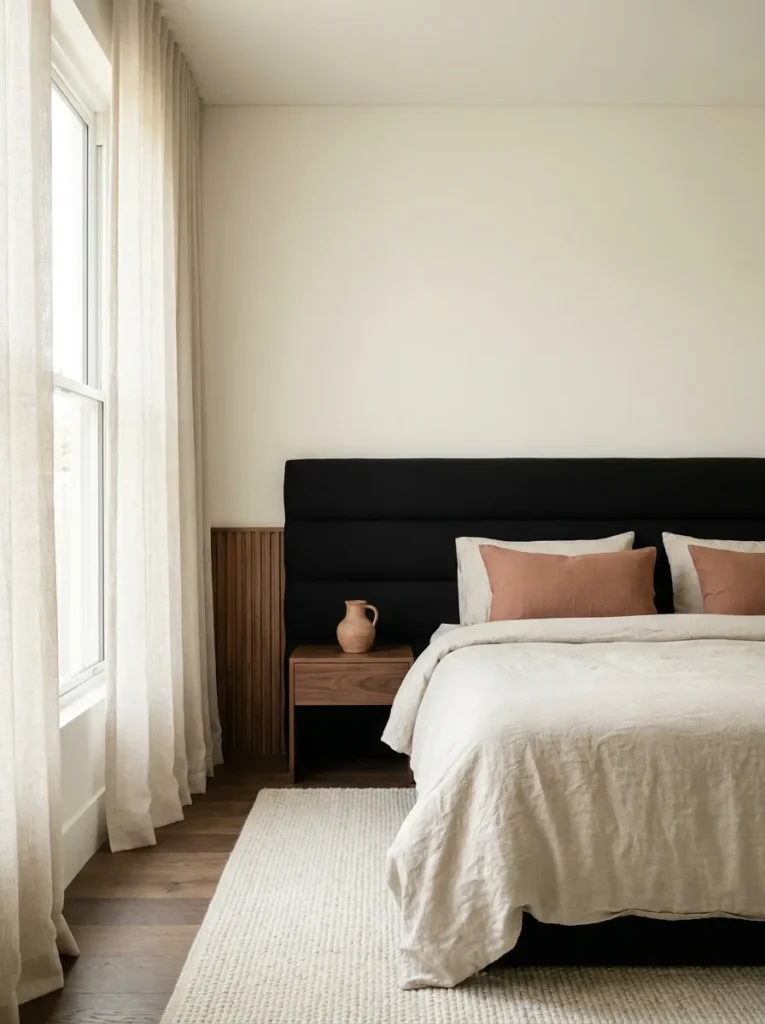
7. Soften the Room With a Black Velvet Headboard
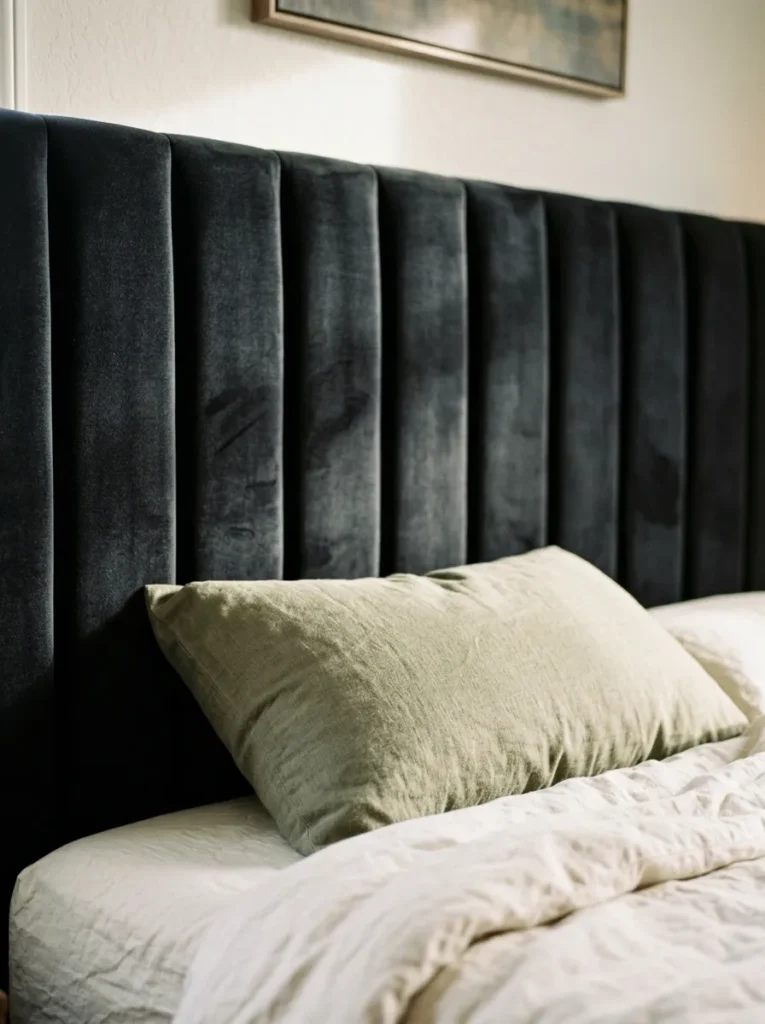
Black velvet is visually richer than a flat black fabric because the nap changes with the direction of light. It may appear charcoal during the day and much deeper under evening lamps.
Choose a simple panel or vertical-channel design rather than heavy diamond tufting. A cleaner shape allows the fabric to provide the texture without making the headboard look overly formal.
For a balanced color scheme, pair it with:
- Cream sheets
- An oatmeal duvet
- One muted olive or dusty-rose cushion
- Light or medium wood furniture
A queen-size velvet headboard may cost roughly $140 to $350, depending on its height, construction, and mounting system.
Avoid placing a completely black velvet headboard directly against a black wall unless the headboard has a visible brass, wood, or pale-fabric edge. Without that separation, the bed’s shape may disappear.
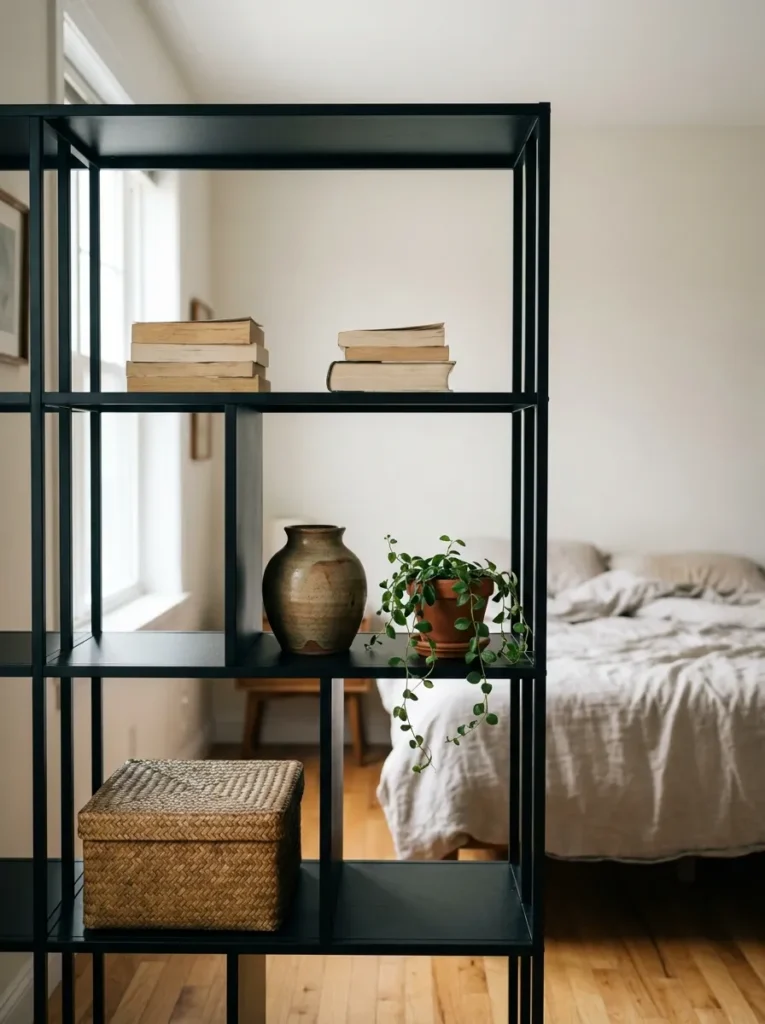
8. Use an Open Black Bookcase for Height and Storage
An open-back black bookcase provides useful vertical storage without blocking as much light or sightline as a solid cabinet.
Place it beside the bed, in an empty corner, or between a sleeping area and a small workspace. The open structure makes it particularly suitable for apartments and multipurpose bedrooms.
Do not fill every shelf. Aim to use approximately two-thirds of the available space and leave the rest open.
A balanced shelf arrangement might include:
- A small trailing plant
- Two short stacks of books
- One ceramic vase
- A woven storage box
- At least one empty section
Repeat cream, wood, or terracotta within the display so the bookcase connects with the wider room color scheme.
Keep heavier items on the lower shelves and anchor the unit securely to the wall.
Black Bedding and Textiles That Still Feel Soft
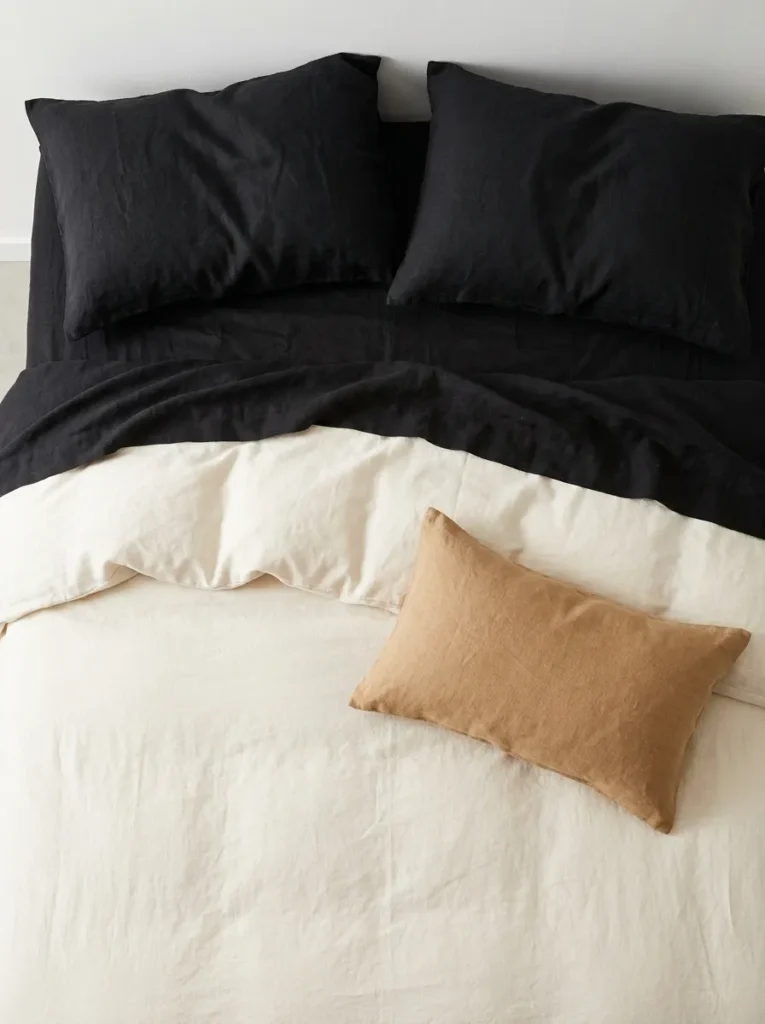
9. Layer Black Linen Beneath a Light Duvet
An entirely black bed can look like one large dark block. A better approach is to let black appear around the edges.
Use black for the fitted sheet, pillowcases, or folded-back top sheet, then layer a cream, oatmeal, or warm-white duvet over it. The lighter duvet should remain the largest visible textile.
Linen works particularly well because its slightly irregular weave softens the color. Washed cotton offers a similar relaxed effect at a lower price.
Try to keep at least 60 percent of the visible bed light. Black sheets under a cream duvet create enough definition without making the mattress look like a visual void.
Finish the bed with one tan, oatmeal, or muted terracotta lumbar pillow. Another row of black cushions is unnecessary and may make the styling feel too deliberate.
10. Drape a Black-and-Cream Throw Across the Bed
A patterned throw is the easiest way to test black bedroom decor without painting a wall or replacing furniture.
Choose herringbone, windowpane, a broad stripe, or a restrained geometric pattern. Small, high-contrast prints can look visually busy from across the room.
A 50-by-60-inch throw works on many full and queen beds. A king-size bed usually needs something closer to 60 by 80 inches so the blanket does not look undersized.
Instead of folding it into a rigid horizontal rectangle, drape it over one lower corner. The uneven placement makes the room look more relaxed and lived-in.
A quality cotton, wool-blend, or chunky knit throw may cost approximately $35 to $90. It can also connect black picture frames or lamps with otherwise light bedding.

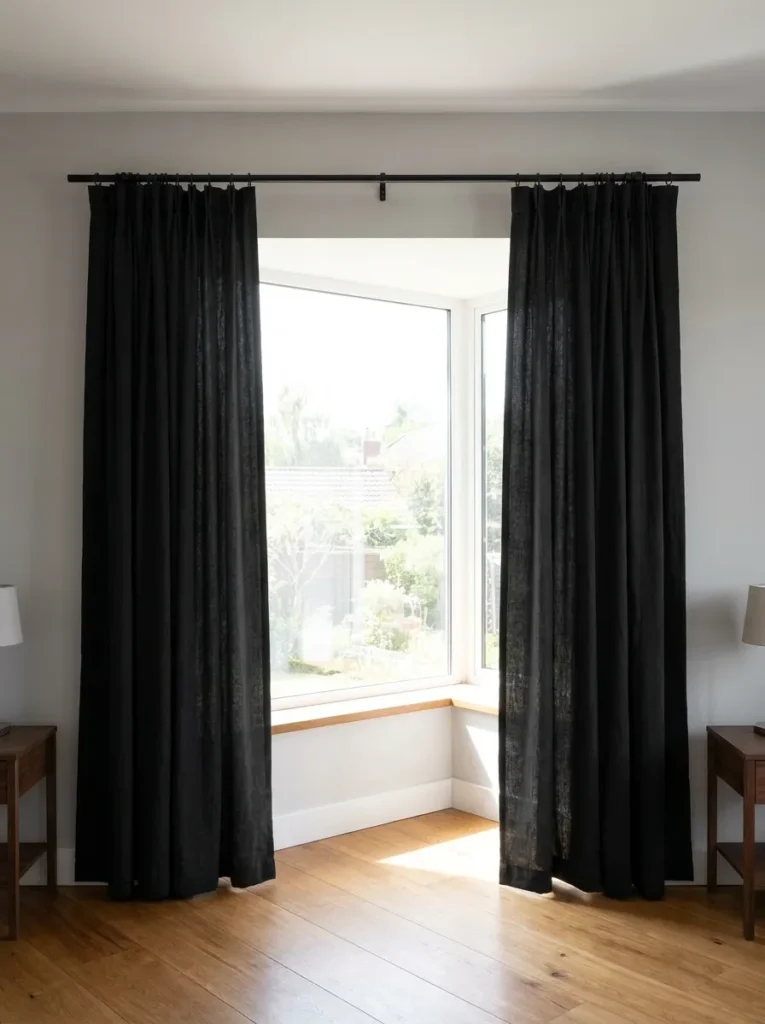
11. Mount Black Blackout Curtains High and Wide
Black curtains can look severe when they permanently cover the window, but they look polished when they frame the opening.
Mount the rod approximately 4 to 6 inches above the window and extend it 8 to 12 inches beyond each side where the wall allows. That extra width gives the curtain panels room to stack away from the glass.
Choose cotton-linen or a textured woven fabric with a separate blackout lining. Cheap shiny polyester can hang stiffly and reflect artificial light unevenly.
Use floor-length panels that end around half an inch above the floor. Curtains that stop at the window sill can visually shorten the wall.
During the day, pull the panels fully open. At night, close them for privacy and light control.
12. Ground the Bed With a Correctly Sized Black Rug
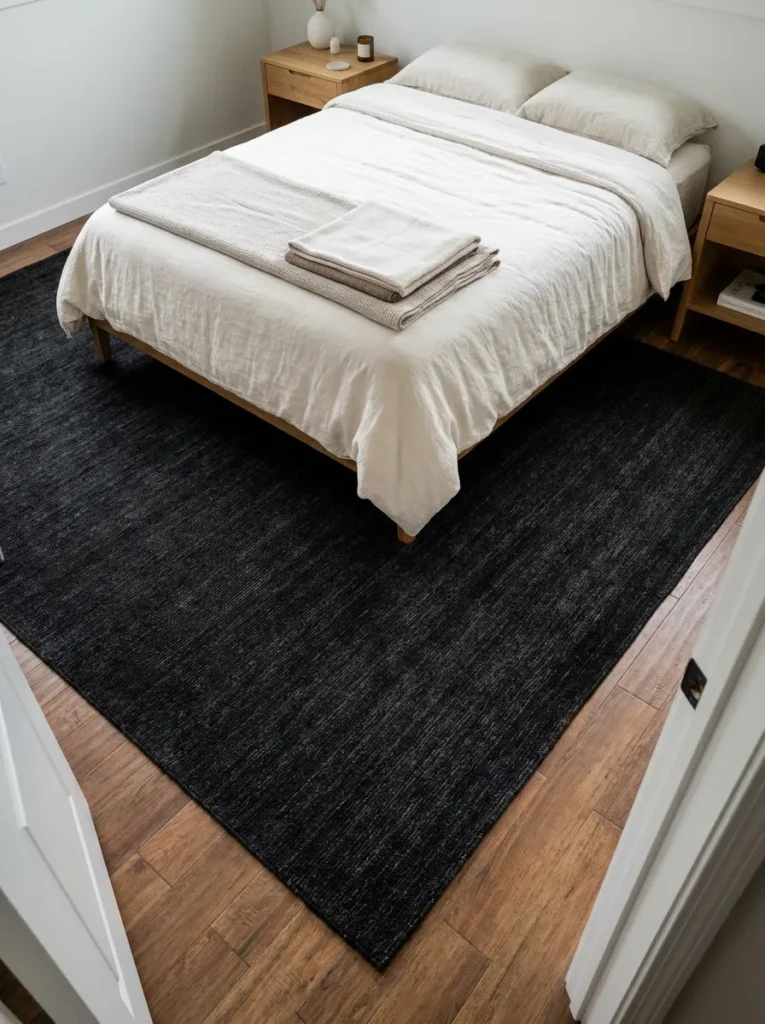
Rug size has more influence on a bedroom than rug color. A small black rug floating under the lower edge of the bed will make the entire arrangement look disconnected.
For a queen bed, a 6-by-9-foot rug is the practical minimum in a compact room. An 8-by-10-foot rug usually gives a more complete, balanced appearance.
Aim for approximately 18 to 24 inches of visible rug beyond the sides of the bed. There should also be enough rug at the foot to make the sleeping area feel properly anchored.
Choose a black rug with:
- Heathered yarn
- Raised texture
- A faded tonal pattern
- A charcoal-and-black weave
These options create more depth than one flat, solid-black surface.
Pair the rug with pale bedding and allow some wood flooring to remain visible around it.
Color Pairings and Details That Make Black Feel Warmer
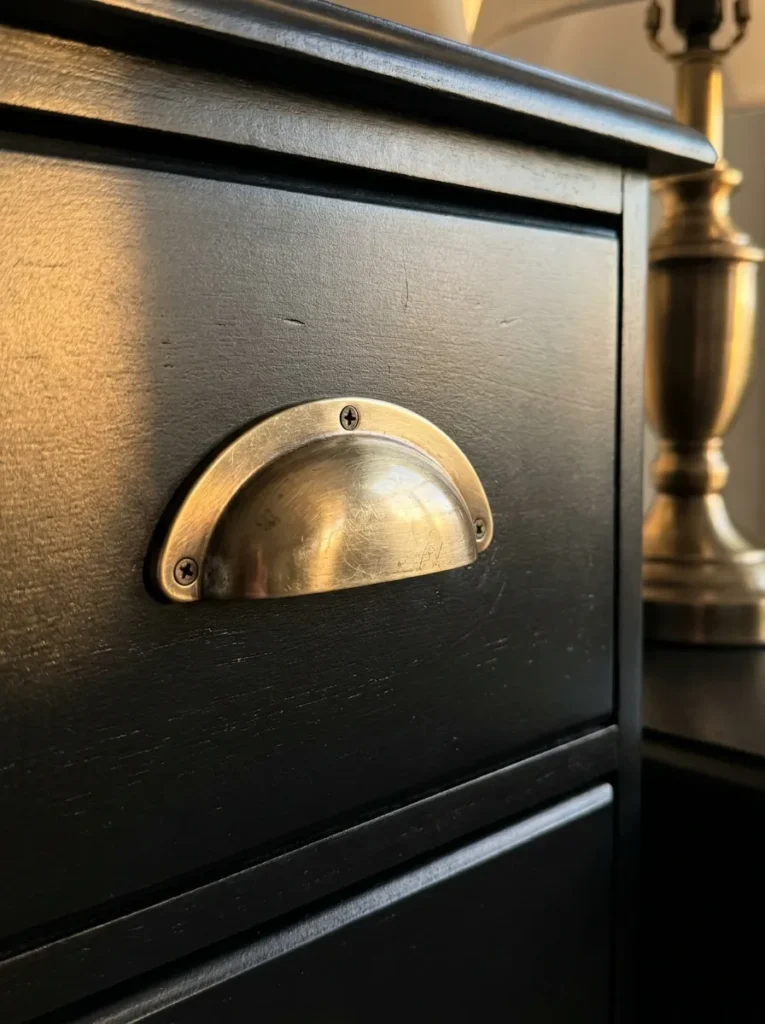
13. Add Brushed-Brass Hardware to Black Furniture
Black and brass work because the metal reflects warm light against a dense, dark background.
You do not need a room full of metallic accessories. Six drawer pulls, two lamp bases, or one brass-framed mirror are usually enough.
Before buying replacement hardware, measure the distance between the existing screw holes. Selecting pulls with the same center-to-center measurement will save you from filling and redrilling each drawer.
Choose aged, antique, or brushed brass rather than very shiny yellow metal. A softer finish feels more convincing beside matte-black paint.
Keep the rest of the accessories restrained. Cream ceramics and warm wood complement the pairing. Several additional gold ornaments will make the room feel themed instead of collected.
A simple hardware update can often fit within a $25 to $75 budget.
14. Pair Black Walls With Walnut or Warm Oak
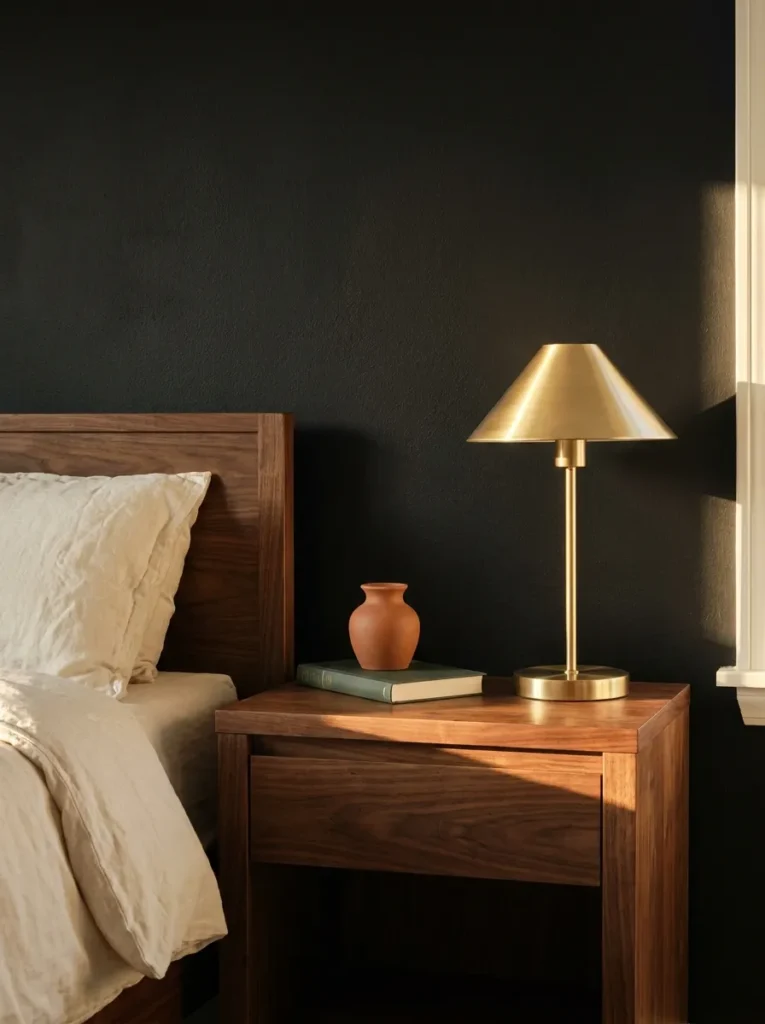
Black walls paired with black furniture can remove too much depth. Walnut, acacia, warm oak, and medium-stained pine introduce grain and a natural mid-tone between dark paint and light textiles.
Choose beds and nightstands with visible legs so more flooring remains in view. This keeps the furniture from becoming one solid block against the wall.
A secondhand wood nightstand can often be refreshed with a thorough cleaning, light sanding, and furniture oil. Replacing one worn handle may be all it needs.
Avoid gray-washed wood in this palette. Cool gray finishes can make a black bedroom feel colder, while warm brown timber creates a smoother transition between black, cream, terracotta, and brass.
This combination is one of the most reliable choices for a cozy bedroom that still feels grown-up and tailored.
15. Introduce Terracotta for Earthy Warmth
Terracotta is one of the strongest accent colors for a black bedroom because its reddish-brown undertone pushes against black’s coolness.
Use it in two or three controlled places:
- Two pillow covers
- One clay table lamp
- A small ceramic vase
- A narrow stripe in a throw
A balanced room color scheme might contain approximately 50 percent cream, 25 percent black, 15 percent wood, and 10 percent terracotta.
Choose dusty clay, rust, or muted cinnamon rather than bright orange. The softer tones feel grounded and work better with walnut, aged brass, and natural linen.
Do not distribute terracotta equally across every surface. One concentrated group near the bed will feel more intentional than several tiny orange objects scattered throughout the room.
16. Create a Restrained Black-Framed Gallery Wall
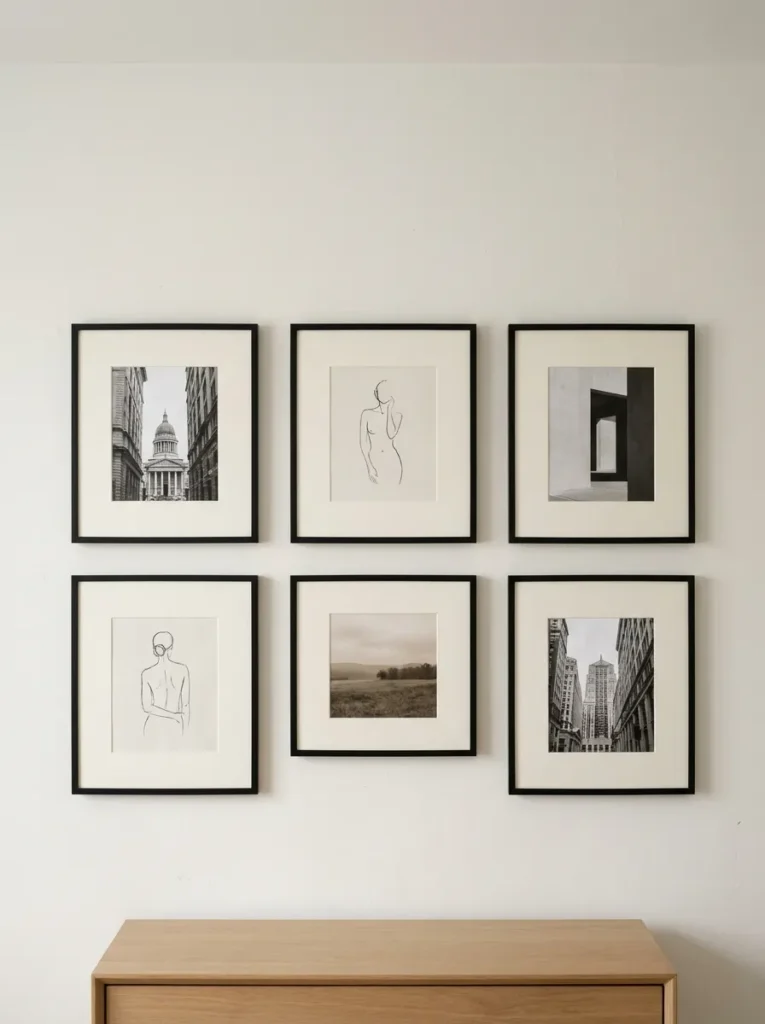
A gallery wall is a renter-friendly way to introduce black through repeated thin lines rather than paint.
Use five to seven frames with the same finish and profile. Vary the artwork sizes instead of mixing ornate, thick, and thin frame styles.
Lay the arrangement on the floor before hanging it. Keep approximately 2 to 3 inches between frames and leave generous blank wall around the full grouping.
White, cream, or pale-beige mats create breathing room and stop the black frames from merging into one heavy shape.
Black-and-white photography, minimal line drawings, muted landscapes, and botanical prints work well. Avoid filling every frame with a high-contrast image; the artwork should support the room rather than dominate it.
Place the grouping above a dresser or on an open side wall rather than squeezing it into a narrow gap.
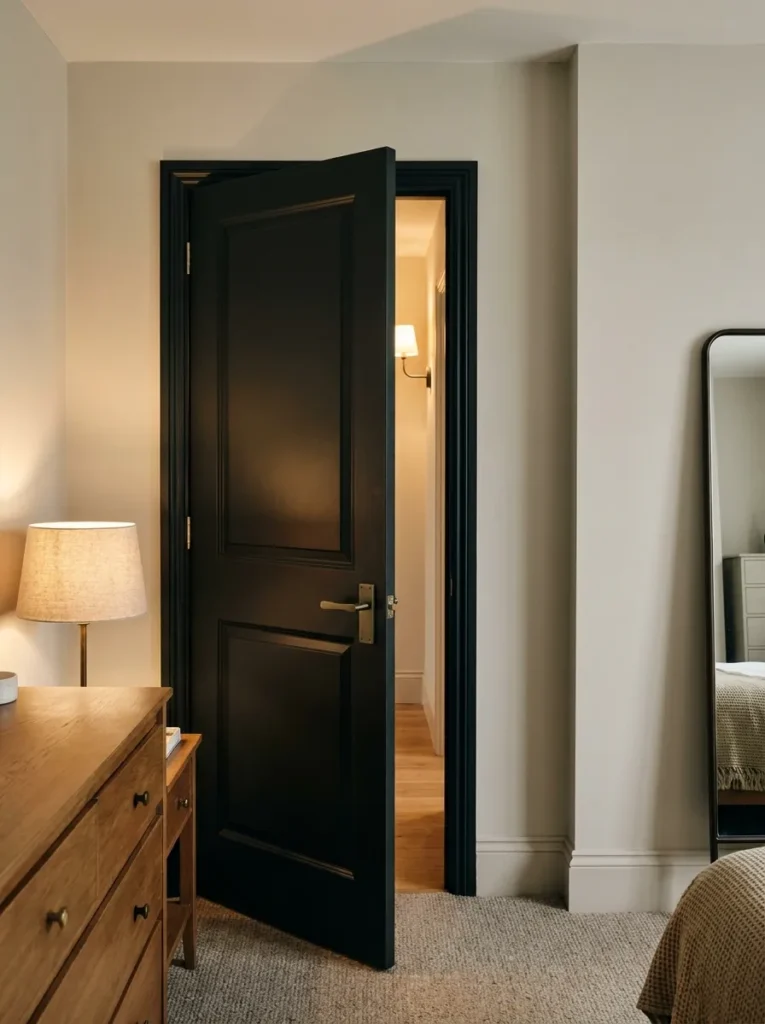
17. Paint the Door and Door Frame Black
A black interior door adds architectural contrast without changing the bedroom walls or purchasing new furniture.
This idea works especially well in a white or pale-gray room where the doorway currently disappears. Painting both the door and its surrounding frame creates a cleaner, more complete result than painting the slab alone.
Prepare the surface carefully:
- Clean away dust and grease.
- Lightly sand glossy areas.
- Apply the primer recommended for the door material.
- Use a durable low-sheen or satin enamel.
- Allow sufficient drying time before closing the door.
Wall paint is not the best choice because doors require a finish that tolerates regular touching and cleaning.
A quart of paint, primer, and basic supplies may cost roughly $45 to $100, depending on the brand and surface condition.
How to Choose the Right Black Paint
Not every black paint looks the same once it is on the wall. Window direction, flooring, bulb temperature, and surrounding textiles can pull out subtle warm, blue, green, or gray undertones.
Popular options worth sampling include:
- Sherwin-Williams Tricorn Black
- Benjamin Moore Black Beauty
- Farrow & Ball Off-Black
Do not make the final choice from a phone screen or a small paper chip.
Paint at least a 12-by-12-inch sample on the wall near the window and another on the darkest side of the room. Check both samples in morning daylight, late afternoon, and under the actual bedside lamps.
Bring the bedding, curtain fabric, rug sample, and wood finish beside the paint. The goal is to judge the complete coordinated home color palette, not the black in isolation.
Use matte or low-sheen paint on broad walls. Reserve satin or durable enamel for doors, trim, and furniture.
Frequently Asked Questions
How do you make a black bedroom look bigger?
Limit black to one large surface or two smaller features. Keep the ceiling and at least two walls light, use furniture with visible legs, and mount the curtains beyond the window so the glass remains fully exposed during the day.
A large mirror positioned opposite or beside the window can help distribute daylight. Pale bedding also prevents the bed the room’s largest object from becoming another dark block.
What colors work best with black bedroom decor?
Cream, ivory, oatmeal, camel, warm beige, walnut, terracotta, and muted olive are among the easiest colors to pair with black.
Brass introduces reflected warmth in small amounts. Black and bright white can also work in a modern bedroom, but that combination needs textured materials such as linen, wool, woven wood, bouclé, or handmade ceramics to avoid feeling sterile.
Can a small bedroom handle black walls?
Yes, but use black strategically. Start with the headboard wall, lower wall paneling, the ceiling, or a painted door instead of wrapping all four walls.
Keep the largest textile usually the duvet or rug in a light color. Add one lamp beside the bed and another light source across the room so the corners do not disappear after sunset.
How much does it cost to decorate a black bedroom?
A paint-focused update may cost approximately $75 to $150. Adding curtains, hardware, pillows, and a throw may bring the total closer to $250 to $500.
Replacing the bed, dresser, rug, and lighting can push the project above $1,000.
For the greatest effect per dollar, start with one accent wall, warm bedside bulbs, pale bedding, and one brass or warm-wood feature.
The Best Black Bedrooms Use Restraint
Choose one dominant black feature an accent wall, bed, dresser, rug, or ceiling and repeat the color only twice in smaller details.
For example, one matte-black wall, two thin black picture frames, and black piping on a cream pillow are enough to make the room feel connected. Let lighter bedding, warm wood, and layered lighting carry the rest of the design.